We’ve done a lot of walking since we moved to North Wales some seven months ago, although in terms of discovering all this wonderful wilderness has to offer, we haven’t even scratched the surface. Nevertheless, so far we’ve collected several favourite walking routes, and last week we headed out into the foothills of Snowdon to revisit one of the very best. The idyllic trail winds through beautiful oak woodland, past waterfalls and over rock-strewn streams, climbing steadily to the summit of a ragged hilltop crowned with the remains of a castle tower and with views to take your breath away. And as if that isn’t enough, there’s medieval myth and magic afoot, for when you wander through this enchanting place you’re following in the footsteps of the young Merlin to the place where the legend of the Welsh red dragon was born.
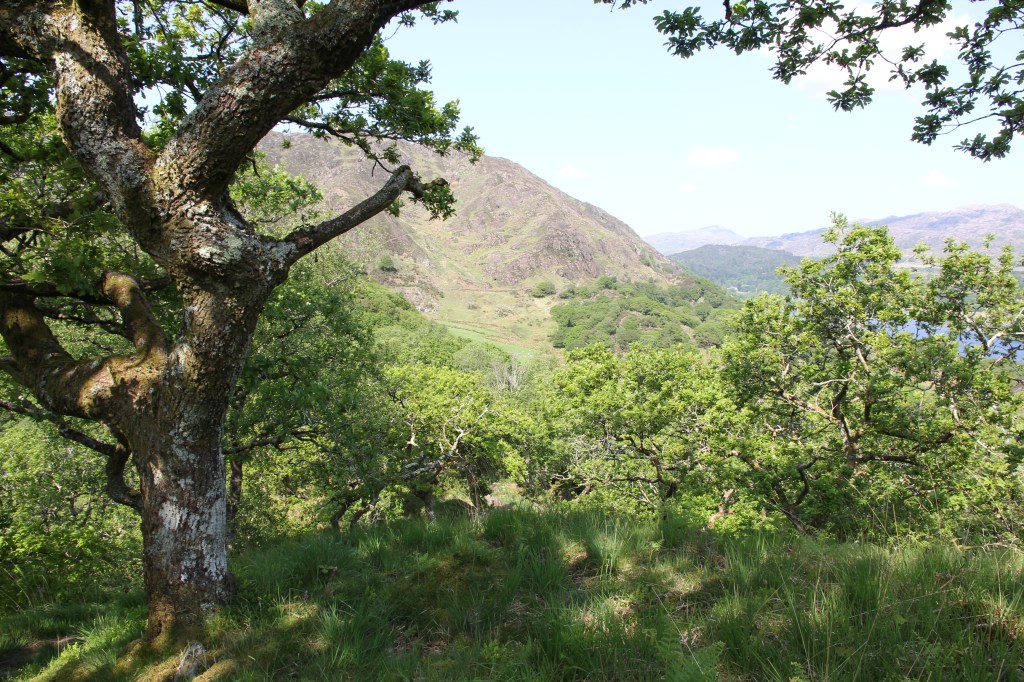
A land of myth and magic awaits…
The walk up to Dinas Emrys, as it’s known, starts from the Craflwyn National Trust car park just outside the stunning village of Beddgelert. It’s not an especially long trail, being little more than a couple of miles there and back, but what it lacks in length it makes up for in height, and almost over-compensates for in views and history.
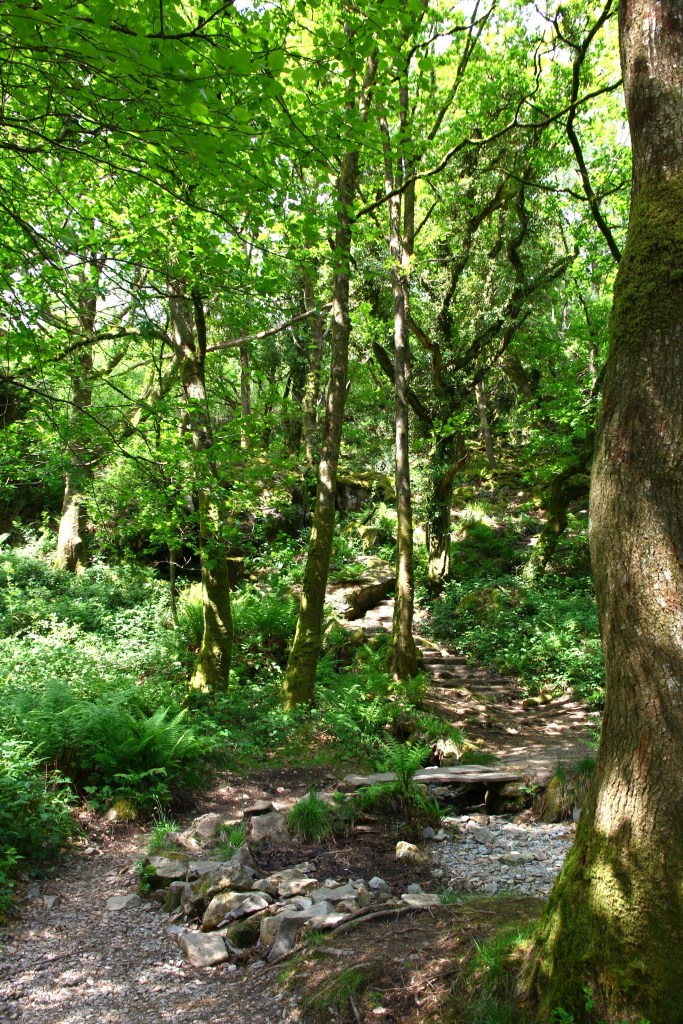
The trail leads up through enchanting woodland…
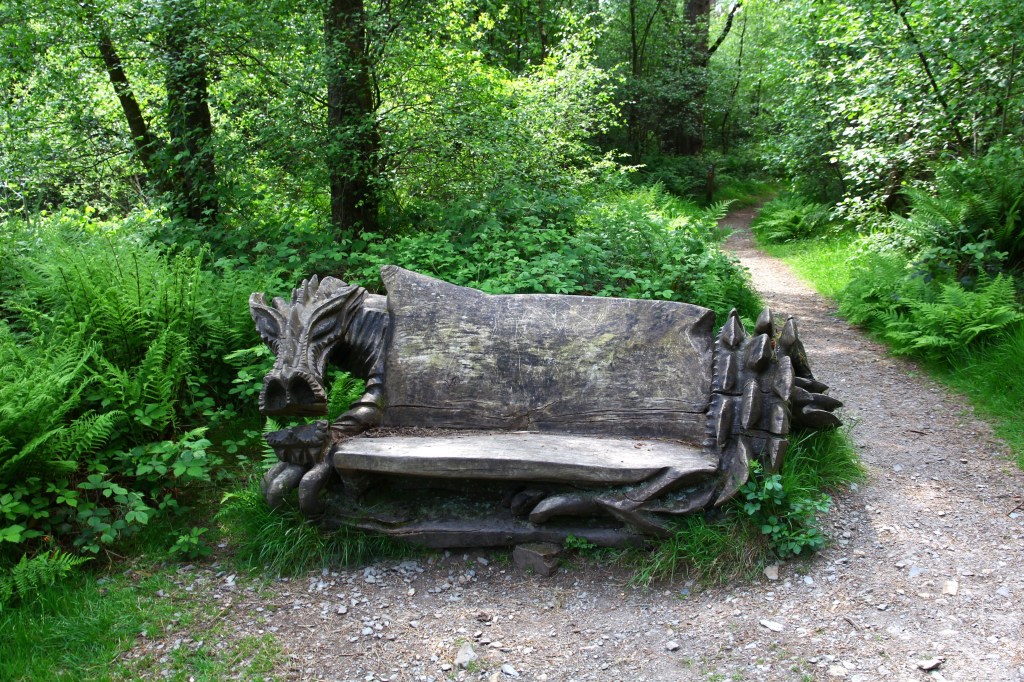
A welcome dragon seat shows us we’re on the right path
The first signs of occupation on the hilltop date from the late Roman period from 3rd – 4th centuries AD, and on the highest point of the rocky outcrop sits the stone base of a castle tower, dated to the 12th century and thought to have been in the hands of Llywelyn the Great (d.1240) after he reached the pinnacle of his power in 1201. But what most people come here for is rooted in a time long before Llewelyn or any of the Welsh princes roamed the land. Rewind to the sixth century, when the Celtic Britons were standing their ground against the advancing Saxons.
Our earliest medieval historians could be gifted, you might say, with somewhat creative minds. It wasn’t unusual for some to blur the boundaries between history and fantasy, and from this melting pot of fact and fiction legends could be born. A good story could take hold of the popular imagination and embed itself in the culture, beliefs and sometimes the very identity of a nation. The earliest source for Dinas Emrys is found in a chronicle penned by a ninth-century monk from Bangor named Nennius, who regales us with the tale in his Historia Brittonum, or History of the Britons.
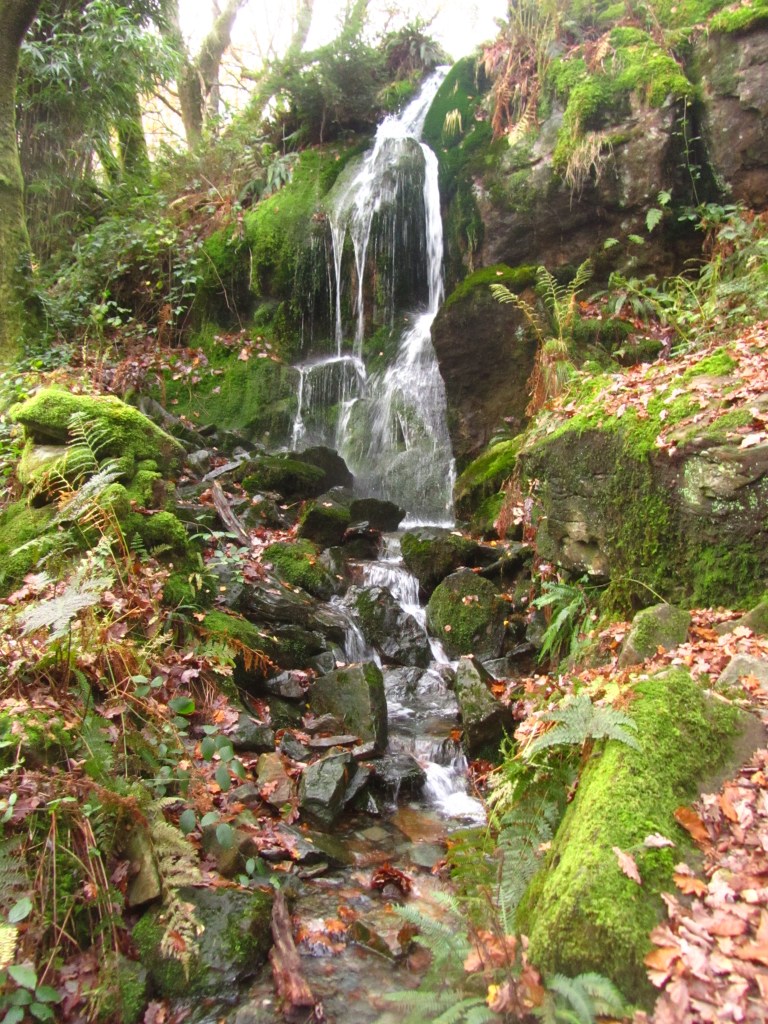
Waterfalls and rock-strewn rivers and streams add to the magic…
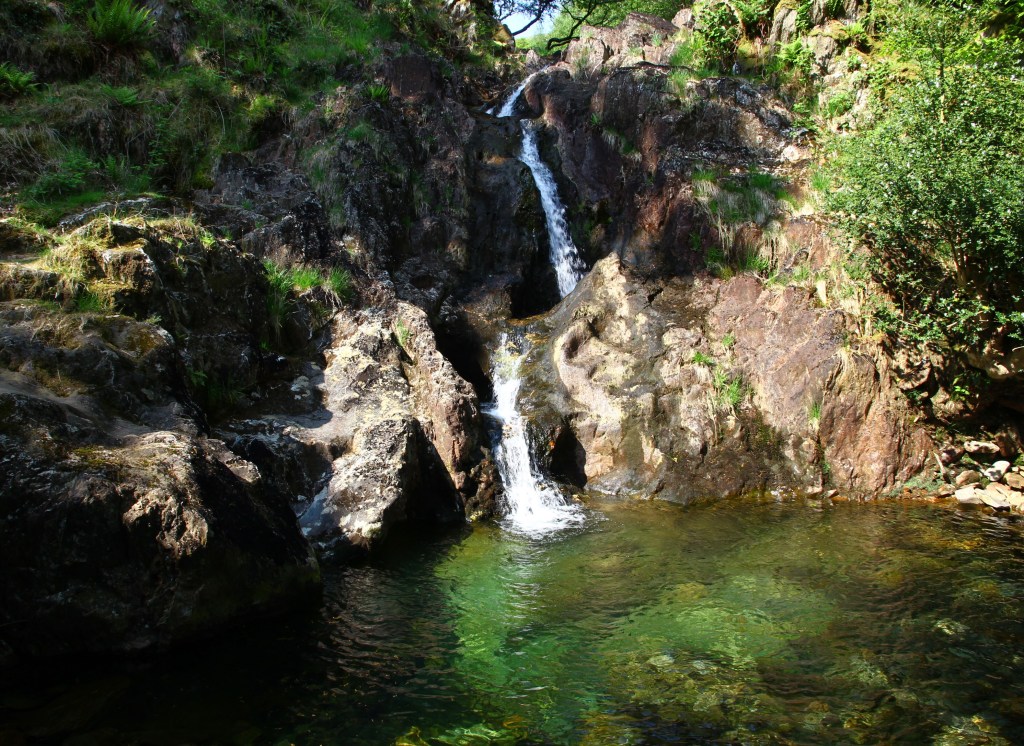
This one tumbles into the enticing Merlin’s pool, the perfect place to stand and stare, and to cool off hot feet…
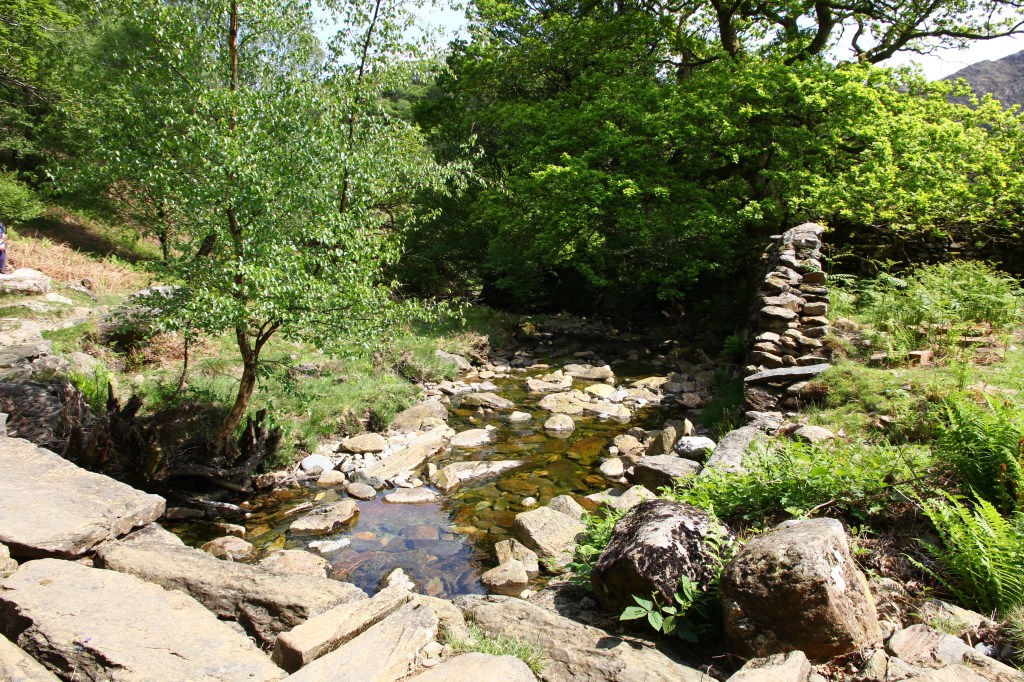
…and the water runs from Merlin’s pool down across the hillside under a stone bridge, a picturesque crossing on the trail
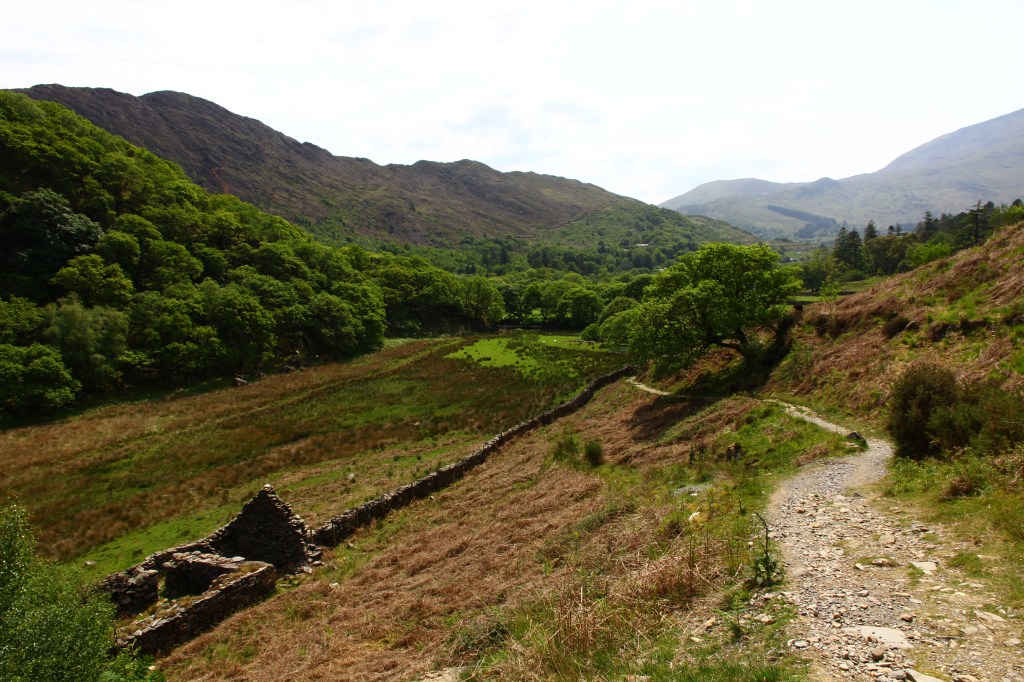
As the path wends its way up, the views just get better and better
The story goes that, in the fifth century, the Celtic King Vortigern chose this lofty location, guarded by mountains and overlooking the Gwynant valley, on which to build a citadel to defend himself from the Saxons. He set about recruiting all the necessary craftsmen, stonemasons and materials and the work began on his new fortress. However, things didn’t go to plan. Every morning when the workforce turned up, they found the walls they’d toiled so hard to build had completely collapsed, and their tools had gone missing. After a while Vortigern, frustrated and bewildered with the lack of progress, summoned his ‘wise men’ for some urgent advice. Accordingly, the king was told that he must:
‘find a child born without a father, put him to death, and sprinkle with his blood the ground on which the citadel is to be built, or you will never accomplish your purpose’.
An obvious solution, really…
Messengers were duly sent out across the country, and eventually a lad from Carmarthenshire was brought to Vortigern upon his hilltop. But this was no ordinary boy: his name was Myrddin Emrys, but we know him today as Merlin.
The preparations were being made for the sacrifice, so young Merlin had to think fast to come up with a way out. Drawing on his supernatural powers, he announced to the king that the reason for the failing building project lay beneath the site. Under the ground, he told Vortigern, was a pool containing two dragons, and it was they who kept destroying the foundations of the new fortress. Vortigern ordered his men to dig down into the mountain, and sure enough, there it was: a pool containing two sleeping dragons – one white and one red. Once disturbed, the winged beasts began to fight, and:
‘the red one, apparently the weaker of the two, recovering his strength, expelled the white one … and the latter being pursued through the pool by the red one, disappeared.’
The king was impressed, but Merlin then made himself look even better by interpreting the brawl as a prophecy, that:
‘at length … our people shall rise and drive away the Saxon race from beyond the sea, whence they originally came’.
Thus, the boy foretold that Vortigern’s red dragon would ultimately triumph over its white rival, which represented the intruding Saxons. With his ingenuity and magical powers Merlin had saved the day, and his neck. The king went on to build his fortress successfully, naming it Dinas Emrys in honour of Myrddin Emrys, the boy Merlin, and his great prophecy.
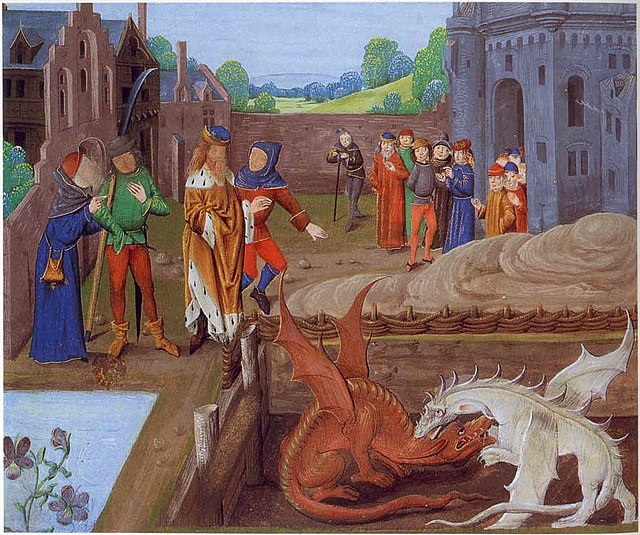
Merlin explains to Vortigern the reason for his failing castle walls as the two dragons fight it out for supremacy
The mystical story featured in other works of history and literature during the Middle Ages. In the twelfth century it was immortalised in Geoffrey of Monmouth’s magnum opus, History of the Kings of Britain, most likely drawing on earlier accounts including that of Nennius. Geoffrey, an Anglo-Norman cleric, historian and bishop of St Asaph in North Wales, also had a fertile imagination. As well as breathing new life into the tale of Dinas Emrys, he deftly wove into his historical text the exploits of a certain heroic king called Arthur, thus paving the way for the creation of another enduring legend…
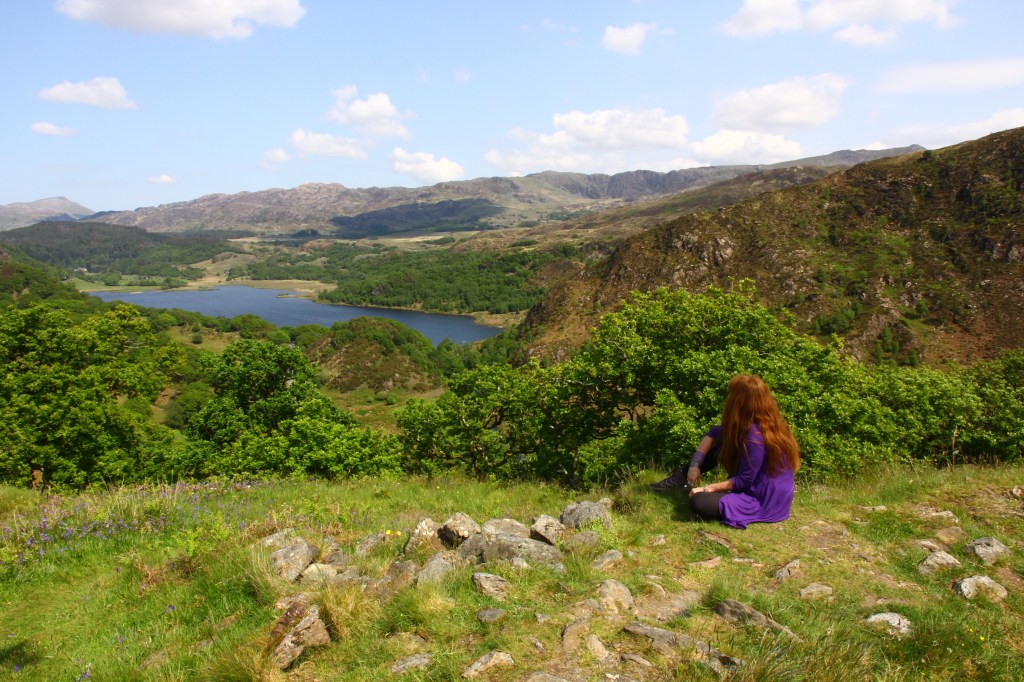
Taking in the awe-inspiring views from the summit of Dinas Emrys…

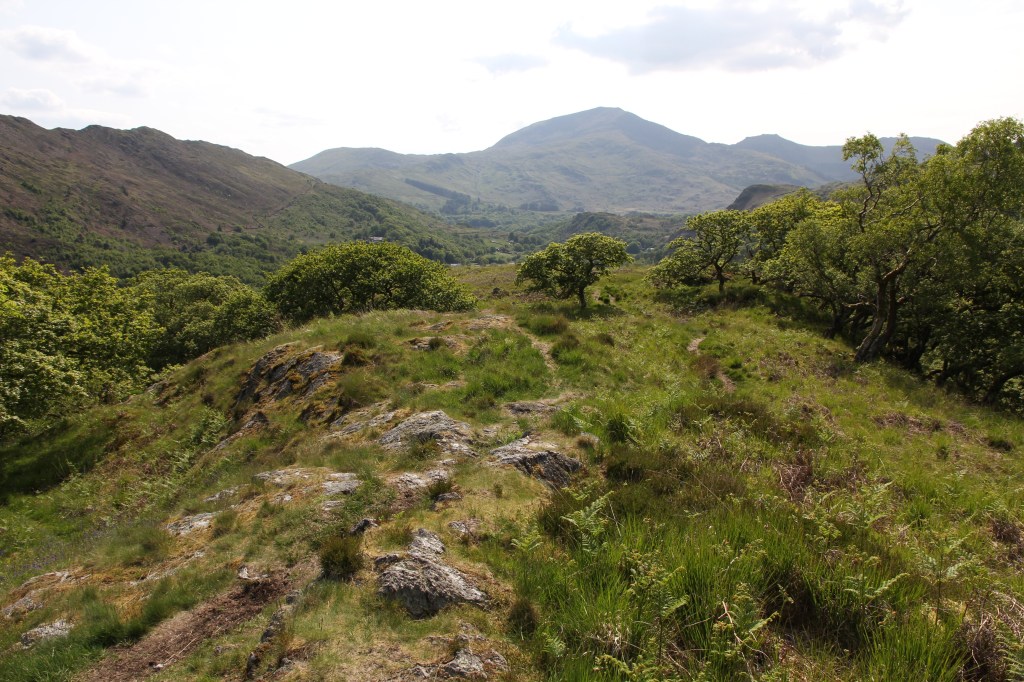
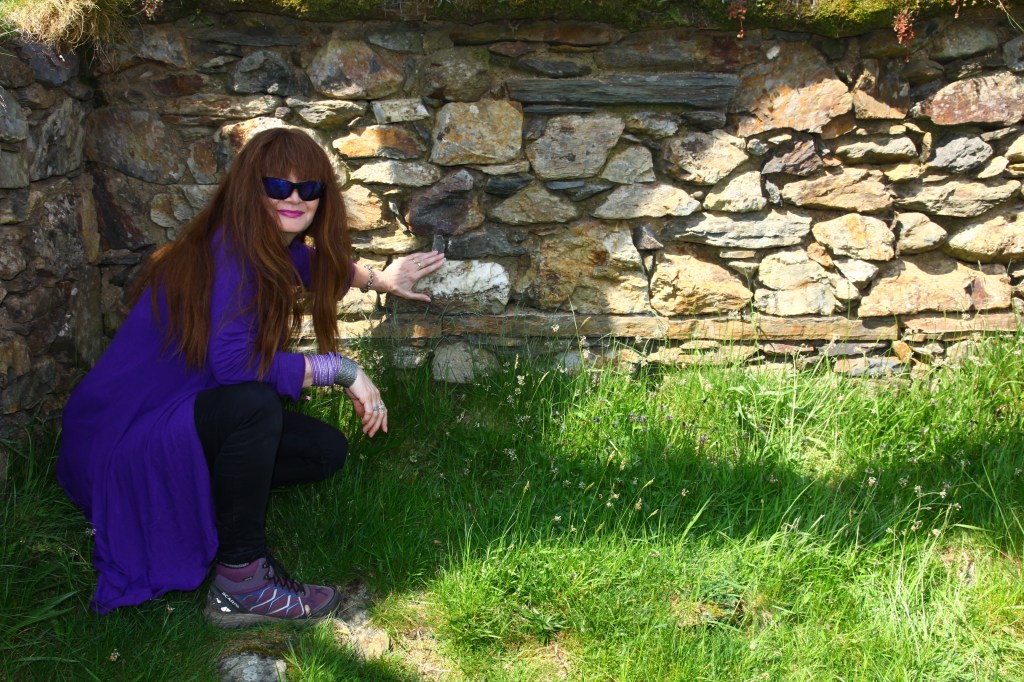
Exploring the stone base of the later, twelfth century tower on the summit
Geoffrey’s book became hugely popular and influential throughout Europe, and soon dragons took up their place in poetry and heraldry as symbols of Welsh royalty and heroism. In legend, Uther Pendragon, whose name means ‘cruel dragon chief’, is said to have sported a dragon as his crest, and over time the mythical creature persisted and established itself as a Welsh emblem. The banner of the Welsh leader and rebel, Owain Glyndŵr (c.1356 – 1416) was emblazoned with a golden dragon, and in 1485, in what may have been a conscious reference to the legend of Dinas Emrys, Henry Tudor marched to Bosworth flying the red dragon. It’s likely that the design of Henry’s triumphant banner contributed to the red winged beast being adopted as the badge of Wales in 1807.
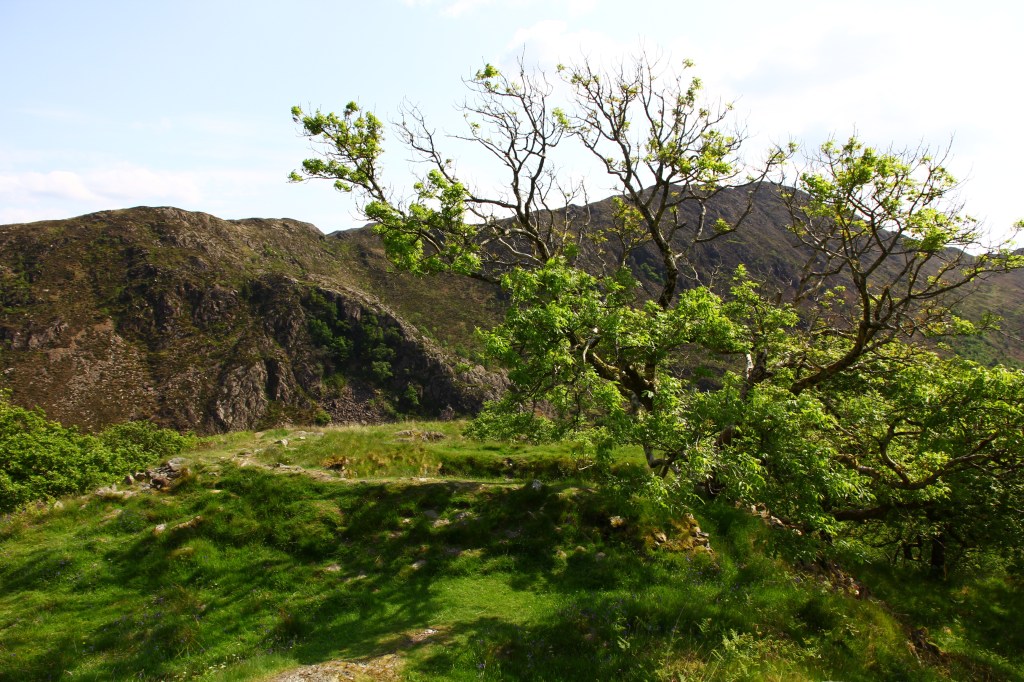
View across the twelfth century tower site
For centuries the ancient hillfort of Dinas Emrys stood quietly watching rulers come and go, keeping its secrets buried until the twentieth century, when excavations were carried out on the site in 1910 and the mid-1950s. Aside from evidence of late Roman occupation, the team found charcoal deposits in the base of the twelfth century tower on the summit that suggest it may have been burned down on purpose. But the most intriguing discoveries were a pool and the remains of rough stone ramparts on the Western edge that had been rebuilt several times over. These fragmented defences, together with pottery and amphorae sherds from the eastern Mediterranean and southern France, were dated to the 5th and 6th centuries AD, to the time of Vortigern. The evidence gathered indicates that this was, in fact, the residence of a Dark Age chieftain who was wealthy enough to import expensive goods and wine from distant lands. So maybe Nennius and his fellow medieval writers were onto something after all…
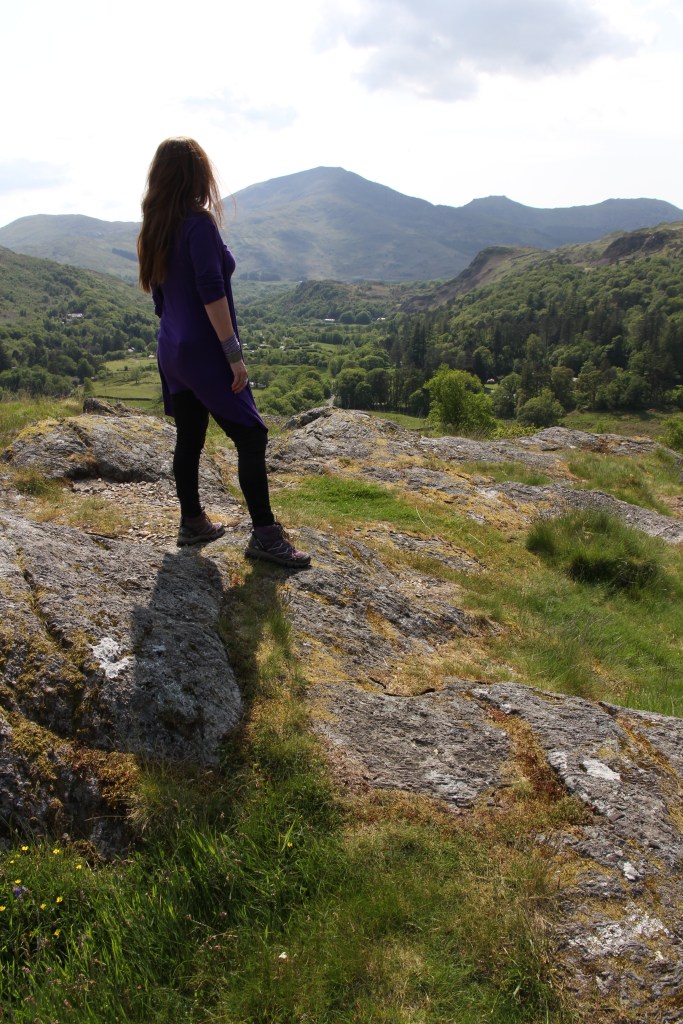
Gazing west across the top of the hillfort towards the outer ramparts that date to the time of Vortigern…
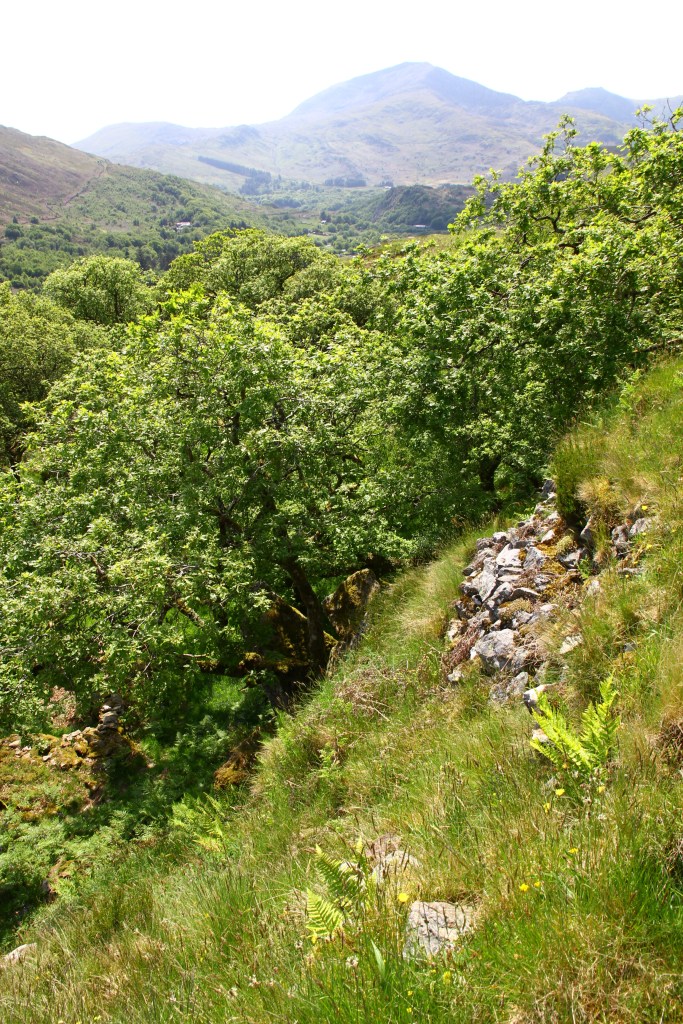
…and a glimpse at some further fragmented remains on the south side
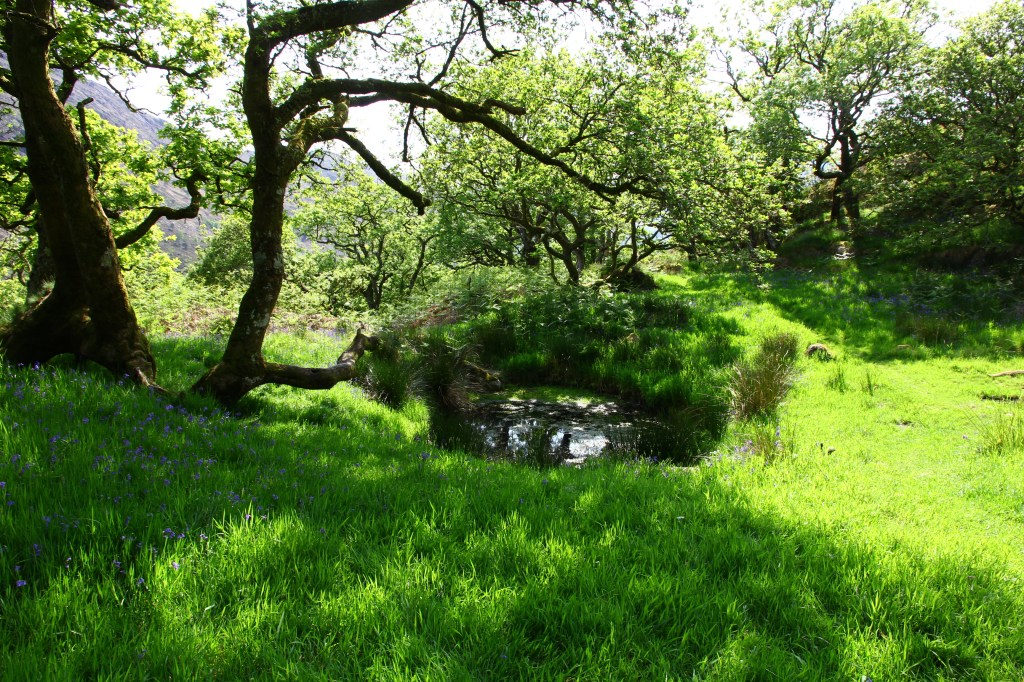
The pool, or medieval cistern, that was unearthed during the archaeological investigation in the mid 1950s
Today, the legendary wooded trail that leads up to Dinas Emrys is truly a haven of peace and tranquility, and when you arrive back down to Earth you really do feel as though you’ve been on a unique journey. Whether or not Vortigern and Merlin really did meet by the crumbling walls of the citadel all that time ago, it’s impossible to ignore the legacy of the story. For there’s an undeniable, even palpable sense of magic that seeps from every rock, stream and tree in this beguiling place. And as for the dragons who dwelt in the pool atop this craggy hill in the heart of Snowdonia, well they’re real too. Of course they are…
 medievalwanderings.com
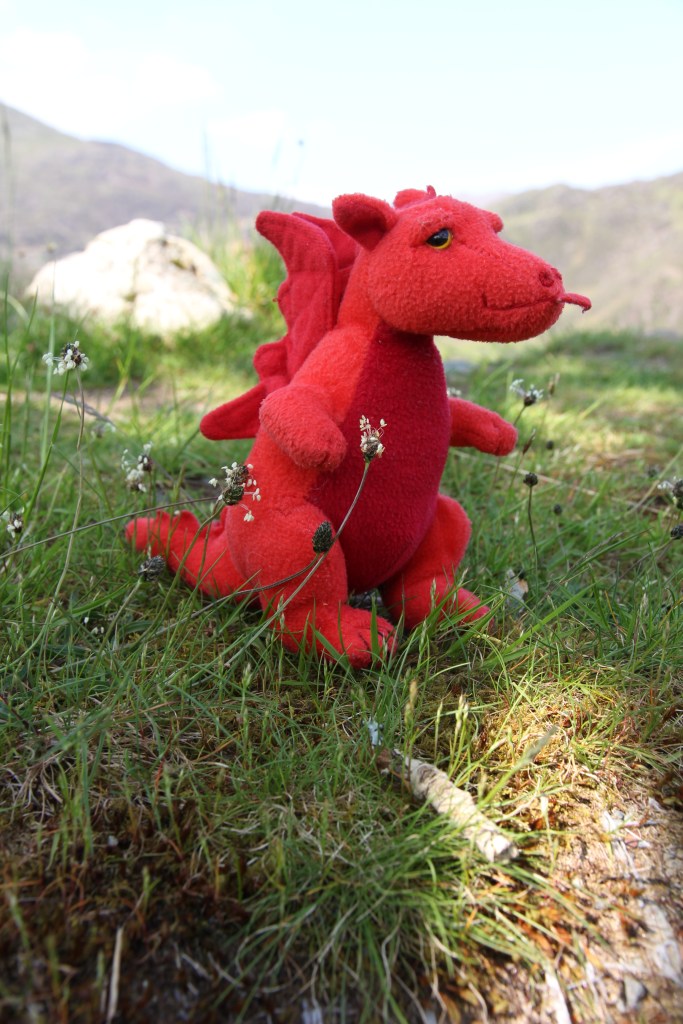
Wait..? What..? Whoever said Dragons don’t exist!?! Idiots – of course they do!
I do love this place, the whole of the area around it is probably my favourite in Snowdonia. There’s something about it that is steeped in magic and wonder – with the names of Vortigern and Merlin echoing down the ages. I always feel like we might turn a corner at any minute and find a sun-dabble woodland glade, complete with a sword in a stone.
Another fab post my love. I shall look forward to our next adventure there.
LikeLiked by 1 person
It’s one of the finest gems in Snowdonia, and I’m already feeling drawn back there. And it’s nothing to do with the ice cream from Beddgelert! 😀
As for dragons, if they live anywhere it’s here in Wales. Besides, there’s that baby one in Conwy, don’t forget.
LikeLike
😀 The ice cream sounds a perfectly good reason to go back out that way if you ask me, besides Dragons like ice cream too – it helps with their throats – why else would their be one under a teashop?
LikeLiked by 1 person
Clearly Marilyn agrees with you! I guess Beddgelert isn’t too far to fly for a cooling treat. Speaking of ice cream, what are you doing in half an hour? 😉
LikeLiked by 1 person
lol! Well they’ve got to cool their burning throats some how!
I’m with you – I’ll treat you to a double scoop and a flake 😀
LikeLiked by 1 person
You’re on. Soon, please! 😀
LikeLike
I remember reading the story of the two dragons under the tower when I was a wee lass — maybe 8 give or take a year? — and I am still surprised that anyone else knows the story. It only showed up in that one book that I borrowed from the library, but it has stuck with me all these years. I remembered the pool in which the two dragons slept and the battle of the dragons. I think that was one of the original books that set me on my medieval path.
Of course dragons like ice cream. A torchy throat needs something cooling. What could be more soothing than ice cream?
LikeLiked by 2 people
Thanks Marilyn! Yes indeed, ice cream would be perfect for a dragon – maybe that’s why there’s such a fantastic shop selling the most fantastic ice cream just down the road in Beddgelert! 😀
Glad you enjoyed revisiting the story and that it revived some good memories from your childhood. It lives on here, which I suppose shows just how keen on myths and legends (and the symbolism of them) the Welsh are. 🙂
LikeLiked by 1 person
I actually looked for more of that mythology and never knew where to look. The book never said “Wales” or “Welsh” in it and being a kid, I figured English? The map just shows England as the entire island. Until I actually spent time there, I had very little understanding of the differences between the area and how different were their histories. It’s still hard for Americans to find all the different mythologies. Of course, I don’t think most Americans are all that interested even in their OWN history.
LikeLiked by 1 person
How strange that the book never mentioned Wales, as the story is so intrinsic to Welsh national identity. From what you say though, I can see exactly why you wouldn’t have known a lot about the different areas as your sources were clearly a bit vague on the detail. Shame there isn’t more interest in American history over there – we can learn so much from the past. But then, even when there is an interest, somehow, we never quite manage to do so!
LikeLike
The schools stopped teaching “real” history before I was out of elementary school. Instead of “history,” we got a muddled thing called “social studies.” A bit of history, a hint of civics, a faint whiff of geography — and it was all so inaccurate and “cleaned up” of the messy details that actually make history interesting. I can understand why most people don’t see why they should bother. At times like this, it’s a tragedy for us all.
LikeLiked by 1 person
It is a tragedy, I can see that having read about how history was handled in schools. I suppose, when you put it like that, it’s no wonder most people don’t bother with it. The kids were really missing out though. What a shame.
LikeLike
The messy bits were the fun bit too. They make it so dull, why would anyone care?
LikeLiked by 1 person
Quite. It was the same when I was at school. Deathly dull and boring, when in fact the complete opposite is true.
LikeLike
If I hadn’t read all those Thomas Costain romances, not to mention Angelique and all the sequels, I would never have learned to love history. What a pity you have to find a side door to discover history is FUN and INTERESTING.
LikeLiked by 1 person
At least you found a way in, and you’ll have got a lot out of your interest too. Sadly for the rest, it’s their loss. 😊
LikeLiked by 1 person
I really laughed as that red dragon popped up at the end!
That looks a superb walk – I wish I’d been with you. The waterfalls are truly beautiful and look really mystical.
I’ve spent a lot of time in Beddgelert over the years (especially the ice cream shop eating sundaes) but have never been up there. I must try to get back to Wales and rectify some of these serious omissions. Besides, I’m also missing Moel Hebog!
LikeLiked by 1 person
Thanks Carol. It’s a really gorgeous walk, and it’d be a stroll in the park for you, so when you do make it back here maybe we could do the trail together. And we love Beddgelert too, it’s one of our favourite trips out – especially with the Glaslyn ice cream shop! The kids love it, and I have to admit I wasn’t a fan of ice cream at all until I moved here and now I can’t get enough of the stuff. The Welsh are very good at this particular delicacy! 🙂
I know the mountain, Moel Hebog, you mean as you can see it from Beddgelert, but I hadn’t realised that was it’s name. Another really popular one is, apparently, Tryfan, which looks amazing (Maddie calls it ‘The Spinosaurus’) but a very formidable challenge!
As for the dragon, only too pleased to give you a giggle! It’s Maddie’s, and she always insists on bringing it when we come to Dinas Emrys. I thought he looked particularly fitting there, don’t you? 😀
LikeLiked by 1 person
When I finally make it back to Wales, we could most certainly do Dinas Emrys together and then I’ll treat you to an ice cream sundae! Our local tearoom has just started doing gelatos and I’ve worked up from 2 scoops with sauce to 3 scoops now (it’s easier than making a choice between flavours!)
I have to say I’m not a fan of Tryfan but it does look spectacular and ‘Spinosaurus’ is a really great name for it. Snowdon is my favourite – it’s actually my favourite British mountain altogether.
LikeLiked by 1 person
That sounds the perfect afternoon out, Carol, Dinas Emrys and Glaslyn ice cream from Beddgelert (the Black Cherry and Amaretto flavour is to die for)!
I know what you mean about Tryfan. It does look stunning, although we’re very happy to admire it from afar! I hadn’t realised Snowdon was your favourite mountain – we’ll walk up it one day, when we’ve got six hours to spare! I understand it’s much more user-friendly than some other peaks though, and I be the views from the top are outstanding. 🙂
LikeLiked by 1 person
Snowdon just has so many routes up it – there are 10 basic ones and lots of variations. Tryfan just has 4 really – plus it’s quite loose and unpleasant in places.
Black Cherry and Amaretto sounds amazing!
LikeLiked by 1 person
I hadn’t realised there were so many routes up either mountain, especially Tryfan.
And Black Cherry and Amaretto is why I’m such a convert to ice cream! Unfortunately for me, there’s also an amazingly good place in Conwy that makes it too. They sell it everywhere round here so I can’t get away from it! When I went to Conwy Castle last week I ended up with a tub of that and peanut butter flavours. It was sheer heaven! 😁
LikeLiked by 1 person
One of my other favourite places to eat on the way into and out of Wales was Bodelwyddan Gardens – they did the most fab lemon meringue pie ever. That was more than 10 years ago now though so you never know if that’s still the case. The gardens were beautiful though and took quite a while to ramble round them.
LikeLike
Beautiful walk — thank you for taking me along and telling me stories along the way.
LikeLiked by 1 person
Thank you, Martha! Glad you enjoyed the scenery and the story. There’s a lot like this in Wales. 🙂
LikeLiked by 1 person
And the beautiful word, Snowdonia 😉
LikeLiked by 1 person
It is indeed. 🙂
LikeLiked by 1 person
I’m back on WordPress after a long break. Scrolling through my feed I find this wonderful post of yours. You have certainly moved to a beautiful and magical part of the world. I enjoyed reading of the history and legends that your walk inspired. It’s great to know that such an ancient and powerful place still exists.
LikeLiked by 1 person
Good to see you back, Suzanne, and thanks for the lovely comments. Yes, we’re very lucky here in North Wales as we’re not only surrounded by stunning scenery, we’re also living in a land rich in myths and legends! 🙂
LikeLike
It sounds like a wonderful place to live. Your post spoke to my inner dragon. 🙂
LikeLiked by 1 person
Thanks Suzanne, it is pretty wonderful here. Love the idea of your inner dragon. We all need one of those! 🙂
LikeLiked by 1 person
A beautiful walk with great tales to accompany it! The dragon seat looks amazing and the woodland path is enticing, while the views are fabulous. I was fascinated by your account of the two dragons fighting and how the red one came to be adopted as the Welsh emblem. But my favourite part of this post? The ending, where you demonstrated that dragons do in fact exits 🐉🐉
LikeLiked by 1 person
Thanks Sarah! Glad you approve of my proof! Thought it might raise a smile or two. 🙂 Glad you enjoyed the story too, and of course the scenery, which I could never capture as well as you, but at least it gives you an idea. So if you ever find yourself wandering around Dinas Emrys, you’ll be able to say: ‘Here be dragons!’ 😀 🐉
LikeLiked by 1 person
I will indeed – that’s a sentence I’ve always loved since I first saw an ancient map!
LikeLike
Super. Great pictures – you can’t beat a good dragon.
LikeLiked by 1 person
Absolutely! Thanks John, glad you enjoyed it.
LikeLiked by 1 person
This walk appears to have everything Alli. Fantastic scenery, lots of historical interest and at home with nature it would seem – oh, and those myths and legends of course. You certainly seem to be in your element here, and it looks like you’ve had some lovely weather to make the most of it. It might look a bit different in the winter though 😊
I have made it to Beddgelert in the past, but it was pouring with rain at the time, and never even contemplated walking up to Dinas Emrys. I don’t need to now after your wonderful description and smashing pictures of it. We did venture up to Merlin’s Hill just outside Carmarthen though on another occasion.
Another fabulous post Alli, and I’m learning new things about Wales every time 😊
LikeLiked by 1 person
Thanks Malc, and I’m glad you’re getting to know Wales a bit more through these posts. We are, indeed, very lucky, and we’re only to aware of that since we came here. What began as a move primarily for Nathan has turned out to be a real blessing for all of us. And with scenery, coasts and history (including castles, of course), all around us now, what’s not to love? I can even vouch for it in winter as it still looks amazing. The mountains look wonderful, frankly, in any weather, even if we might not want to walk up Dinas Emrys in the rain! 😀
I hadn’t heard of Merlin’s Hill before, but it sounds lovely. But in any case, thanks for joining me in the wooded and wondrous search for Merlin and the Dragons at Dinas Emrys. 🙂
LikeLiked by 1 person
ked out for you all. Sometimes life can be full of surprises, so Nathan’s given you something back already hasn’t he?
Merlin’s Hill is topped by an iron age fort with some really good views over the surrounding countryside. I spent most of the time up there untangling a sheep that got stuck in a wire fence. She didn’t help me one little bit 🙂
LikeLike
No wonder you didn’t reply to this . What it should have read is “I’m glad that it’s worked out for you all” …..
LikeLiked by 1 person
Ah, no worries Malc. Apologies, I thought I had replied but have just realised it didn’t go through for some reason. But it’s ok, I worked out what you meant, and it made me smile! 😀
Merlin’s hill sounds worth investigating, and we’re hoping to get down that way at some point, so it’ll go on the list of to-dos along with all the castles within striking distance! 🙂
LikeLiked by 1 person