We’ve recently returned from another wonderful holiday in Northumberland. England’s northernmost county is our beloved refuge from the modern world, a place where we can escape our everyday hassles and worries to explore the vast, wild landscape and it’s ancient and turbulent history.
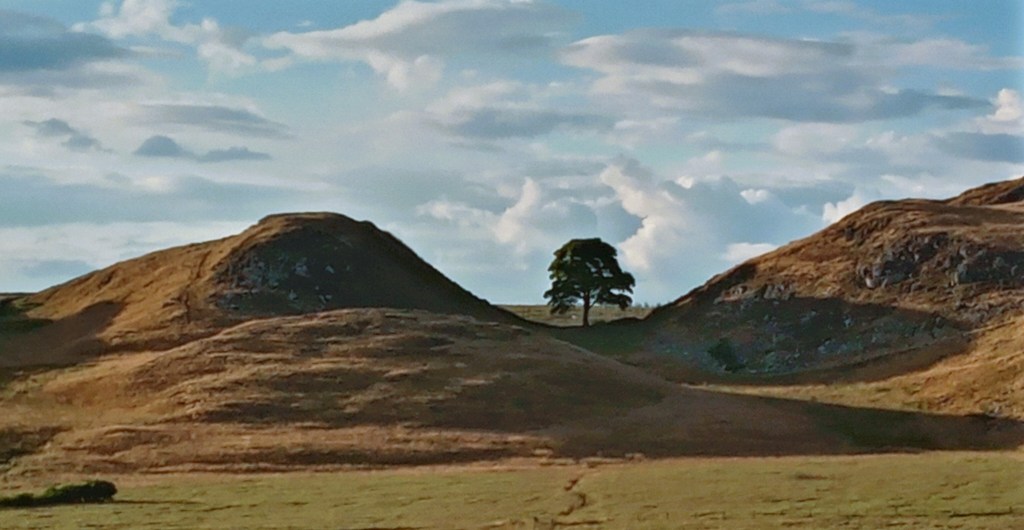
Stunning Northumberland: the Sycamore Gap on Hadrian’s Wall is one of our favourite places in the UK
For centuries this was a lawless place, where border wars raged and no farmstead or house was safe from attack by brigands or enemies. In response to the ongoing conflicts, families who could afford it fortified their homes, giving rise to a landscape scattered with castles big and small. The upshot of all this fierce history is that, for the devout medievalist, Northumberland is a cornucopia of treasures. One of our favourite castles stands on a rocky ledge jutting out into the North Sea, and woven into its story are the treacherous deeds of not one, but two men: a royal earl, and his duplicitous supporter. But although both were ruthless renegades, these men ultimately met very different fates.
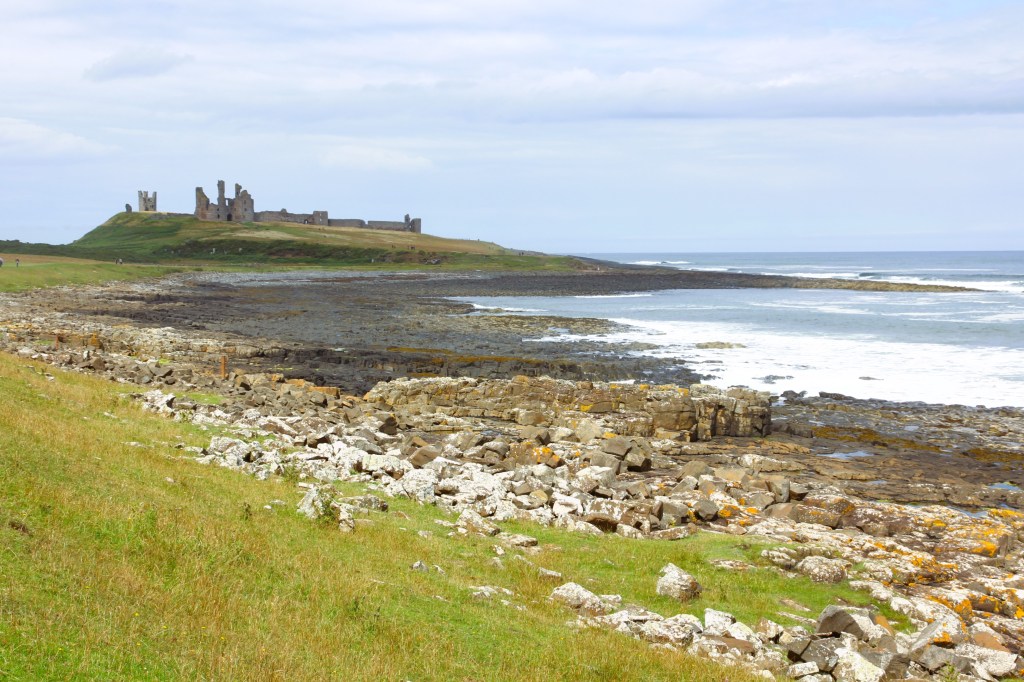
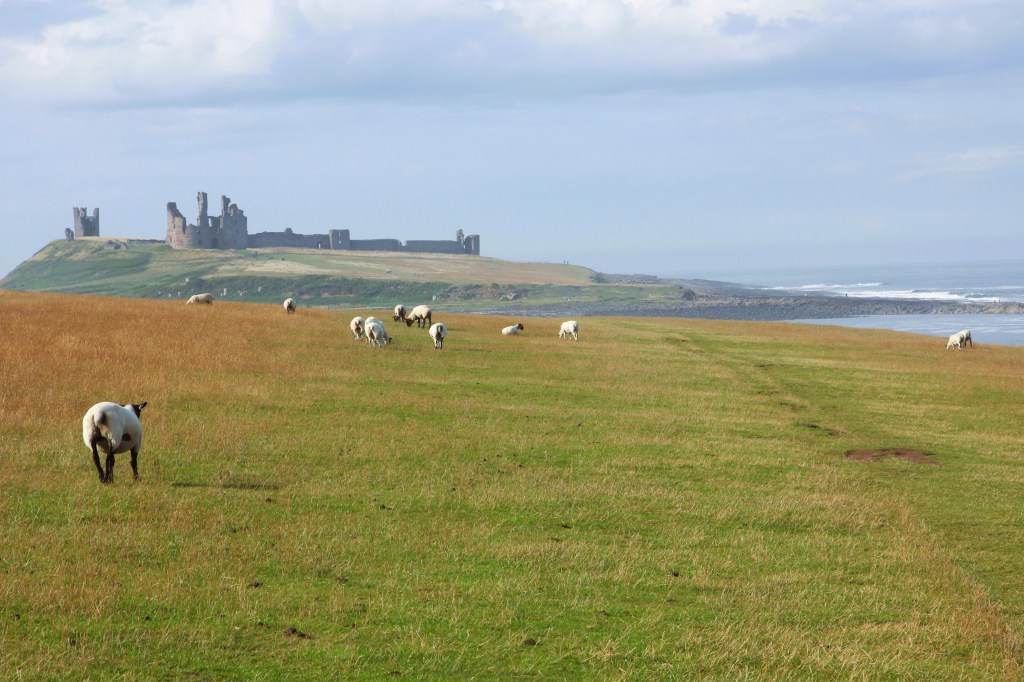
Dunstanburgh Castle looks out across the North Sea from its rocky ledge
The ruins of Dunstanburgh Castle are some of the most striking in the UK, accessible only on foot along a mile of scenic Northumbrian coastline from the village of Craster. Cutting a lonely figure on its remote promontory, it’s hard to believe that this castle was called into existence to act as a defence in the protracted Anglo-Scottish conflicts. Too far from major roads to stop raiders and not close enough to local villages to protect them, it would have been pretty ineffective situated where it was. Instead, it was built to showcase the power and ambitions of Thomas, earl of Lancaster (c.1278-1322), cousin to the weak and unpopular King Edward II, and his bitter enemy.
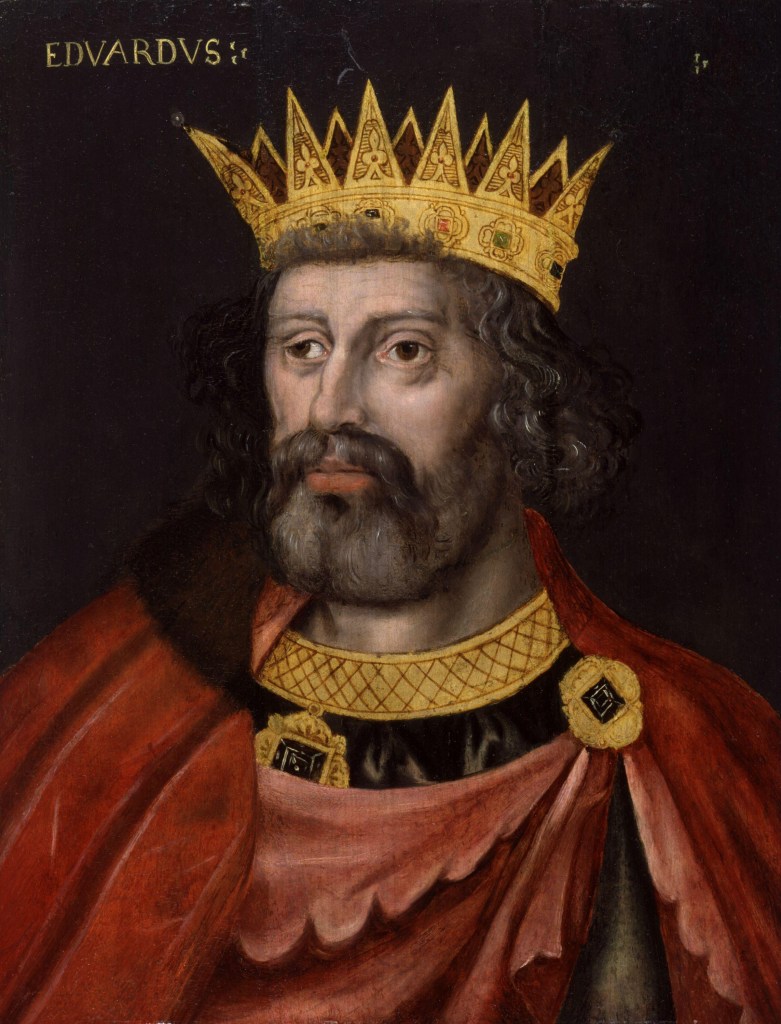
King Edward II (r.1307-1327), cousin and enemy of Thomas, earl of Lancaster
Thomas inherited the Northumbrian barony of Embleton in 1298 from his father, Edmund ‘Crouchback’, the younger brother of King Edward I. For over a decade the earl’s northern estate was all but forgotten, until 1312 when Thomas got himself into dangerously deep water with the king. It seems there was no love lost between the cousins, even from childhood, as the warrior King Edward I is believed to have favoured his nephew’s bellicose character over that of his own son, who preferred the garden to the battlefield. So it seems that the seeds of rivalry between the cousins had been germinating for many years.
As the wealthiest and most powerful noble in the land, Thomas, earl of Lancaster had become increasingly opposed to Edward II’s government, especially when it came to the king’s arrogant and outspoken favourite, Piers Gaveston. In April 1312, Thomas led a rebellion of angry magnates, and Piers was seized and swiftly executed on Lancaster’s own land at Blacklow Hill in Warwickshire. The king, of course, wasn’t best pleased. In fact, he never forgave him. Thomas quickly realised it might be prudent to absent himself from court and take refuge far away in his northernmost territory, so in the spring of 1313 he began work on his castle on the Northumbrian coast, set above a harbour at Dunstanburgh.
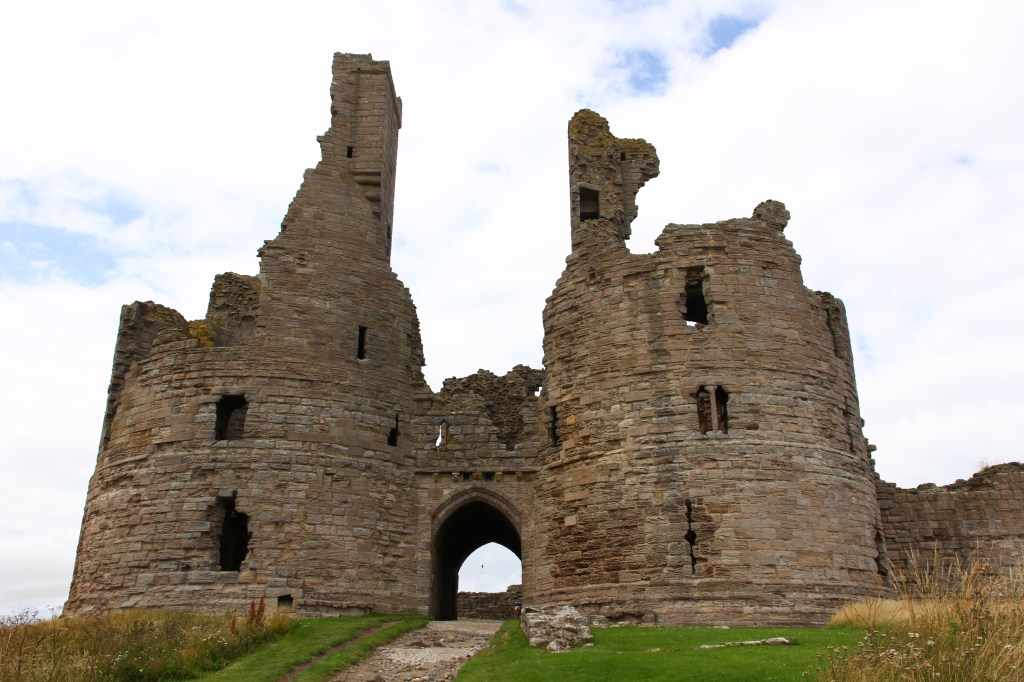
The imposing twin-towered gatehouse, once protected by an outer barbican, would have dazzled visitors to the castle arriving by boat when they approached from the quay below, even though the frontages of the drum towers were two storeys higher then the three floors they concealed behind.
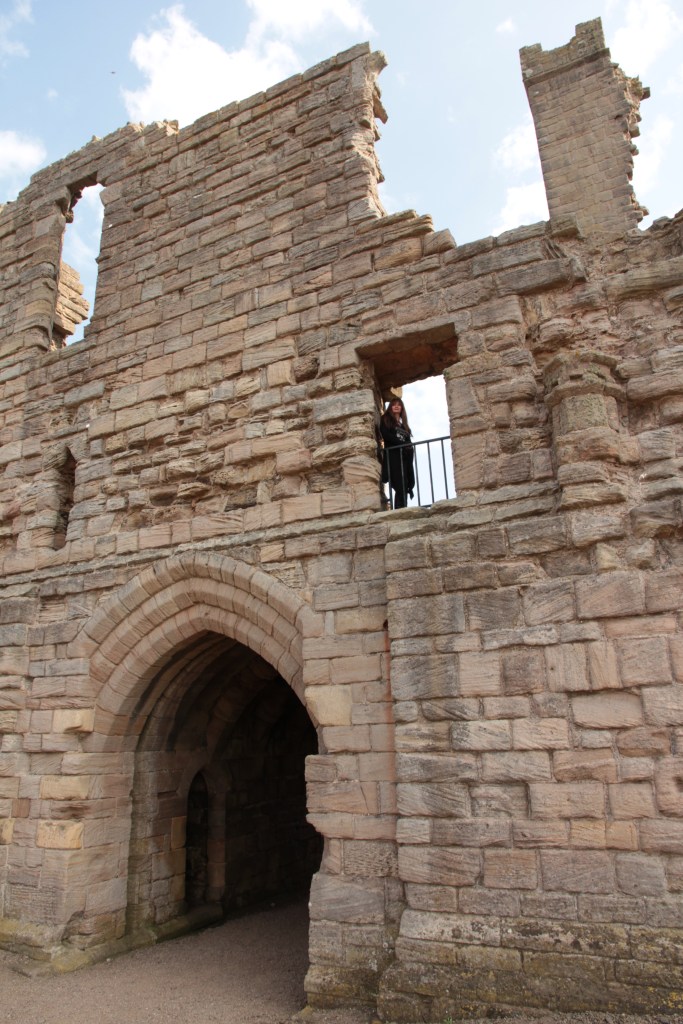
The rear of the gatehouse and its well defended passage. The floors above served as the main accommodation of the earl and his household.
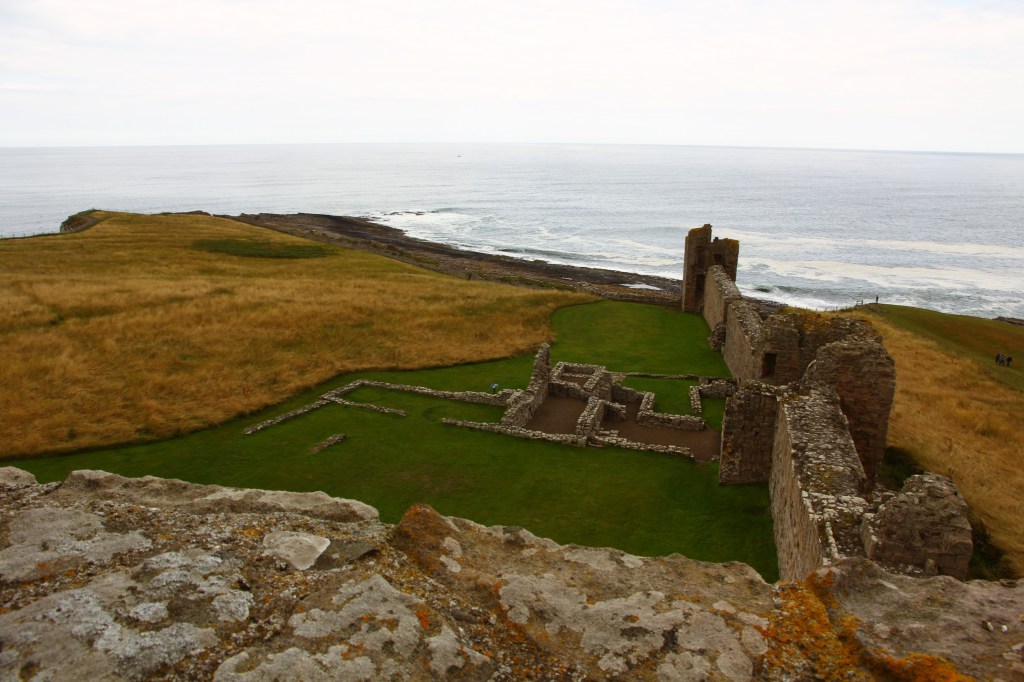
The view from the gatehouse across the vast bailey, which extends to the edge of the rough grass by the high cliff edge to the top left.
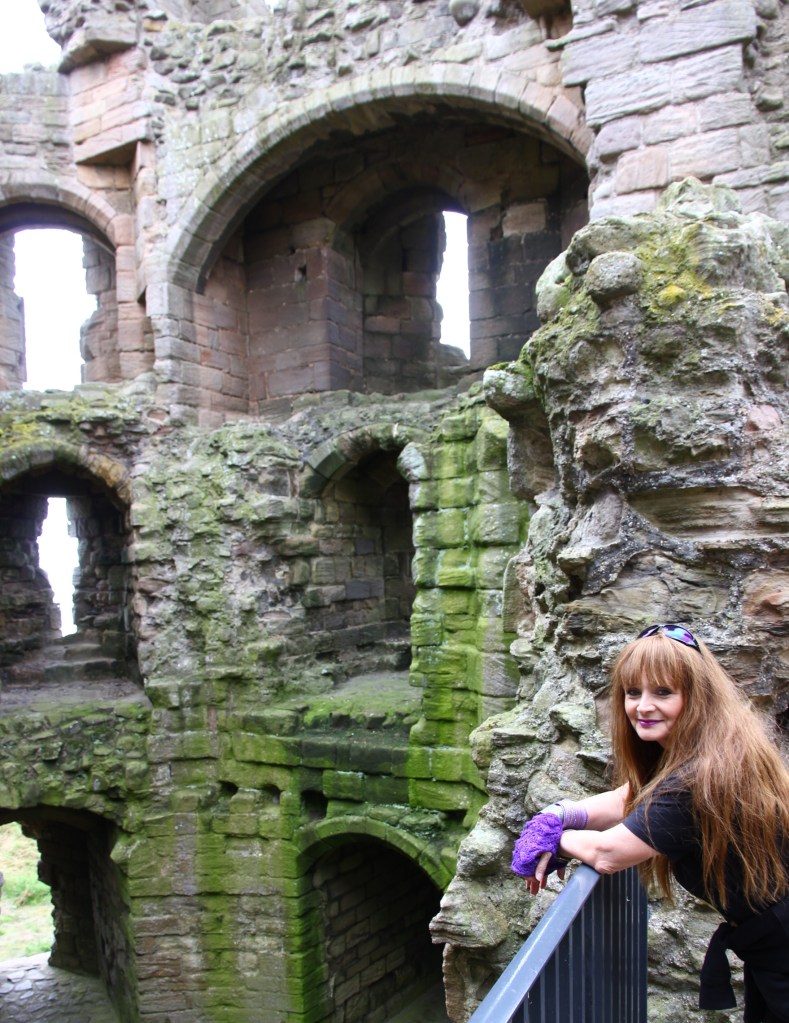
Inside the earl’s principal rooms in the gatehouse.
Designed to rival any royal castle and assert the earl’s authority and his defiance of the Crown from a safe distance, Dunstanburgh was to boast a spectacular twin-towered gatehouse and strong defences. Constructed on the site of an earlier Iron Age fort, the castle made use of the existing earthwork ramparts for protection to the south, while the bulk of the huge outer bailey hugs the dramatic coastal cliffs. Finally, on the landward side, security was provided by a trio of specially created meres, or defensive lakes. Being surrounded by water, the castle took on the appearance of an island, an image some historians see as an allegory of the Isle of Avalon, a sign of Thomas likening himself to the great hero of contemporary literature, King Arthur. If that was the intention, it would have been quite a daring political signal to send in the direction of the royal castle at Bamburgh, some ten miles further up the coast.
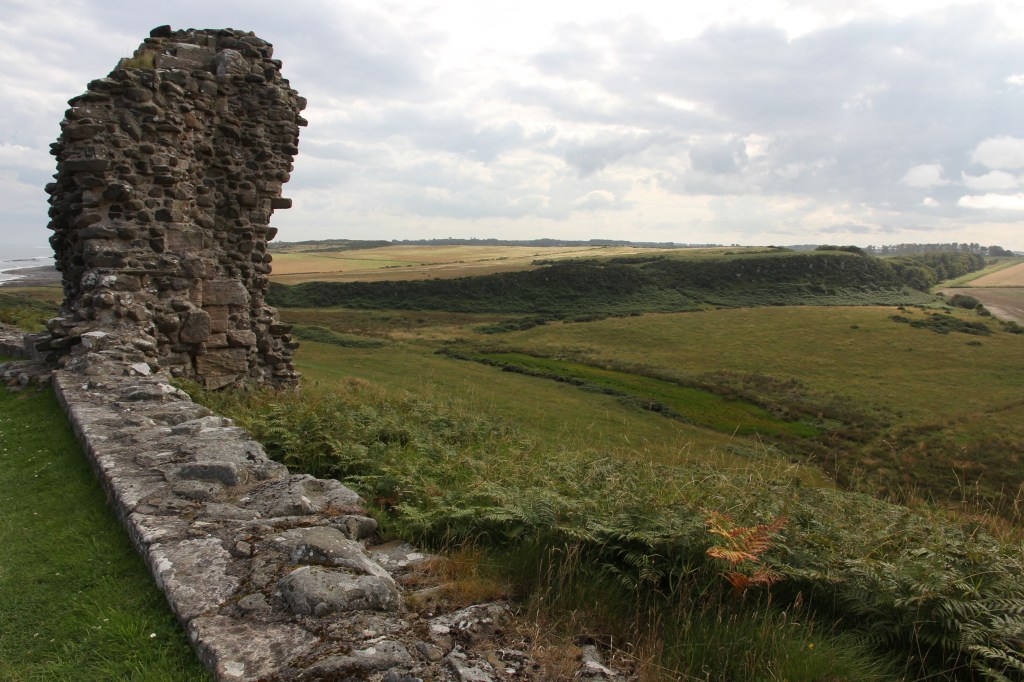
The fields to the west beyond the castle walls once held Thomas’s specially made meres, or water defences, giving the castle the appearance, deliberately some say, of the Isle of Avalon.
Even though Thomas was pardoned for Gaveston’s murder a few months after the event, work on the stronghold at Dunstanburgh continued unabated, almost as though the earl could sense more trouble ahead. The cousins were, nevertheless, reconciled when Edward was desperate for support following his crushing defeat at Banockburn in 1314. A few years later in 1319, Thomas supported the king at the English siege of Berwick-upon-Tweed, and it’s believed that he used the still unfinished Dunstanburgh as his base. But if he did, it was the only time he was to see his grand Arthurian castle. Any fears he may have held were proved right, as before long the cousins fell out again, and Thomas would never return.
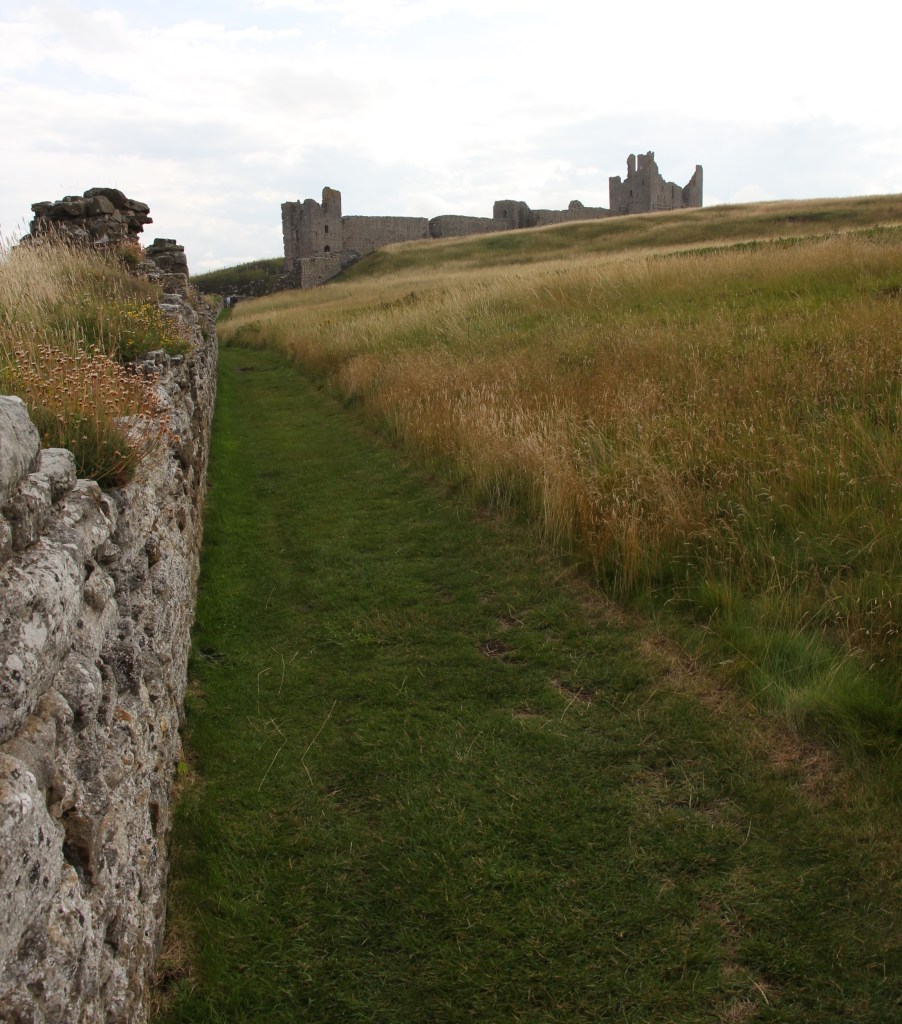
Looking back along the eastern curtain wall to the oddly named Egyncleugh Tower, meaning ‘eagle’s ravine’, which perches on a cliff edge at the end of the south wall. Built during Thomas’s time, this housed two floors of residential rooms and provided another, narrower entrance to the castle over a wooden drawbridge spanning the ditch.
After the death of Gaveston, rather than get on with improving his governance of the kingdom, Edward had simply picked two new favourites, the Despensers, and this self-aggrandising father and son team would end up being even more hated than the pompous Piers. The result, kicking off in March 1322, was another baronial revolt, again led by Thomas, but this time the rebels’ ambitions were flouted. On 16th March, whilst en route to Dunstanburgh in flight from the king’s wrath, the earl and his remaining followers were intercepted at Boroughbridge in North Yorkshire, and Lancaster was captured. Following a humiliating trial for his treachery he was executed, aged around 44, at another of his own castles at Pontefract, and the victorious Edward claimed Dunstanburgh for the Crown.

The North Sea adds its own drama as heaving waves crash onto the rocks beneath the Egyncleugh Tower
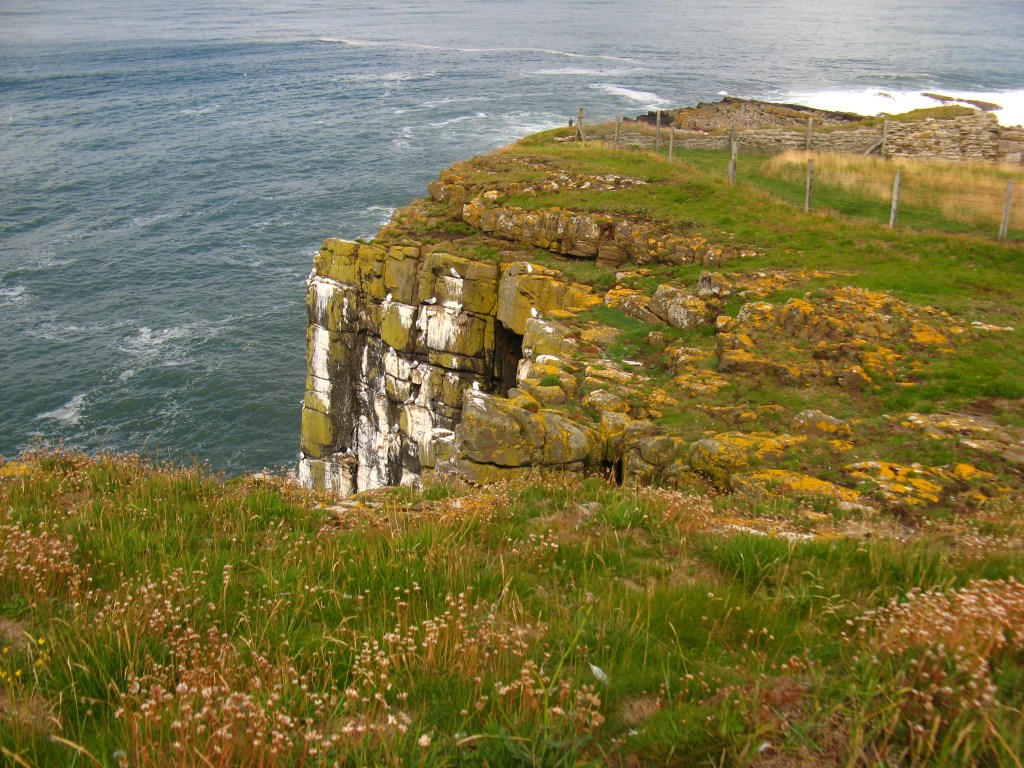
Gull Crag forms the natural northern defences for the castle. The eastern wall on the right comes to an end almost at the edge of the cliffs. No evidence has been found for a wall along the crag, but with sheer cliffs some 30m high in places, there would have been no need to add to nature’s own formidable fortification.
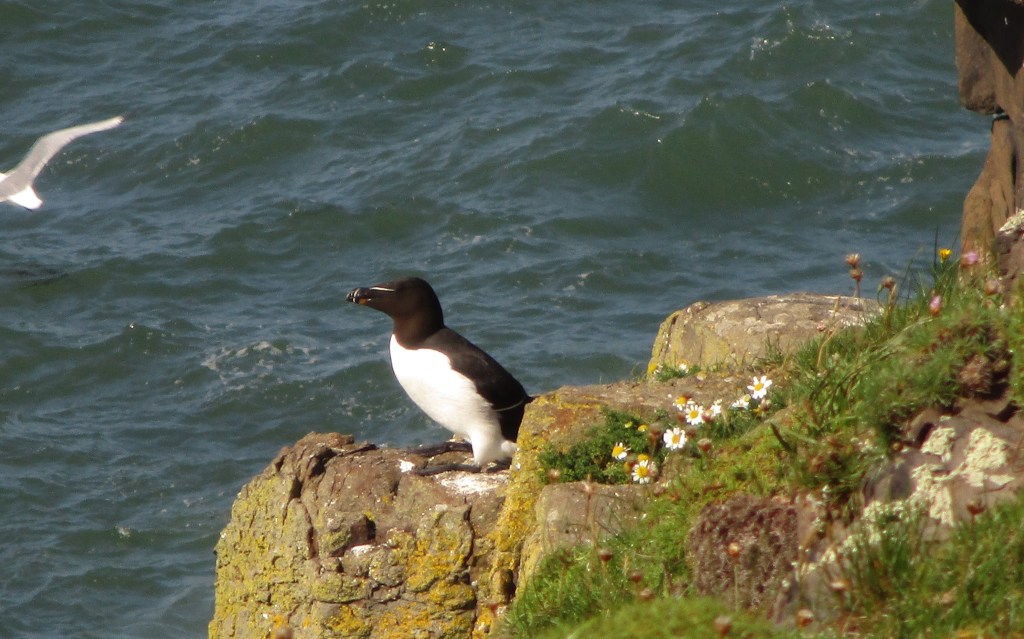
The humans may have left the castle, but the wildlife remains unchanged. Today, Dunstanburgh is a designated Site of Special Scientific Interest, yet is still home to the same wild flora and fauna as it was in Thomas’s time. Gull Crag hosts breeding colonies of many seabirds including kittiwakes, fulmars and razorbills, like this cute one we encountered.
With Dunstanburgh now in the hands of the king, two new constables were immediately installed, but one of the chosen candidates was a double-dealing traitor himself. A minor Northumbrian landowner, Sir John de Lilburn switched loyalties more often than he changed his undergarments. He had, in fact, been one of the rebels who had captured and executed Piers Gaveston, acting on behalf of his patron, Thomas, earl of Lancaster. He was later pardoned for his actions, after which he abandoned Lancaster and became a knight of the royal household. But at heart, Lilburn was a ‘schavaldour’ (a border country dialect term for the leader of an armed gang), and as such he would never let his low standards slip, or his obligations to anyone hold him back from pursuing his own agenda.
At Alnwick in 1315, Lilburn ambushed and tried to murder a royal judge in revenge for the execution of a group of alleged traitors, a sentence he clearly disagreed with. He also antagonised another royal retainer, Roger Maudit, when he ransomed three of his Scottish prisoners without Maudit’s say-so, and pocketed the money. Then, in 1317, while still supposedly in the service of the Crown, he seized Knaresborough Castle from another royal favourite. Shortly afterwards, Lilburn turned coat again, rejoining Thomas, earl of Lancaster for a second baronial revolt against King Edward and the reviled Despensers, only to jump ship yet again, returning to the royalist side just in time to fight with the king’s forces to capture his former patron at Boroughbridge.
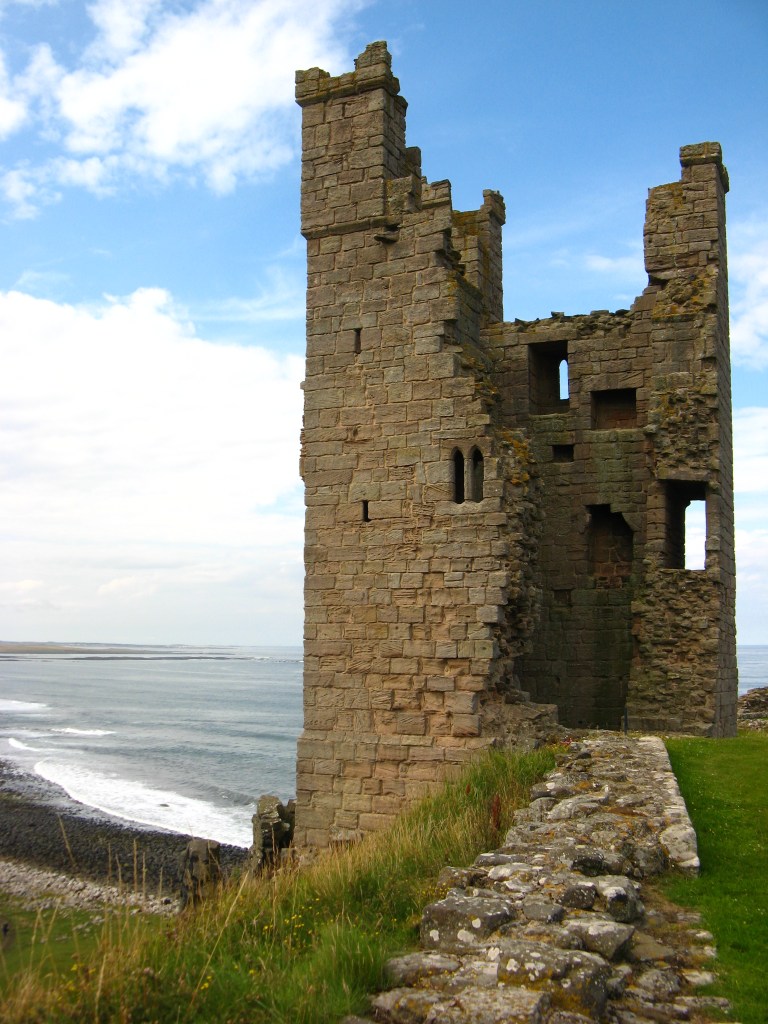
Standing close to the highest point on the site, the Lilburn Tower looks northwards along the coast towards Bamburgh. Named after John de Lilburn, it was most likely built, or at least started as part of Thomas’s design, and perhaps finished by Lilburn himself while he was constable following the earl’s execution in 1322. Either way, I doubt Thomas named it…
The irony of moving into the newly completed Dunstanburgh Castle, built by the earl he’d betrayed to the executioner’s axe, to work for the same king both he and Thomas had rebelled against, could hardly have been lost on John de Lilburn. As the new constable, he may at least have felt a modicum of awkwardness at being partnered in the job with his old adversary, Roger Maudit. In the end the arrangement didn’t last long, and in 1327 Lilburn somehow bagged the post of sheriff of Northumberland. But he never gave up his career of skullduggery, and that same year he is recorded as stealing goods to the value of £100 from the parson of Embleton. However, despite all his treachery and crimes, unlike Thomas, earl of Lancaster, Lilburn lived a long and active life, fighting the Scots for Edward III and holding several political and military offices before finally dying at the ripe old age (certainly by medieval standards) of seventy-six. Not bad for a faithless schavaldour in the lawless frontier lands of the North.
John de Lilburn may have done well out of his long and roguish career, but it seems that Thomas, earl of Lancaster was to become more successful in death than he had been in life. Soon after his execution, a cult began growing up around his memory and his reputation changed from Thomas, the overmighty noble and traitor to Thomas, the political martyr. Soon, miracles were being reported at his tomb at Pontefract, and as the word spread people began flocking to the earl’s burial place. So great was the popular devotion to Thomas that Edward II had to station guards at Pontefract to keep the crowds away.
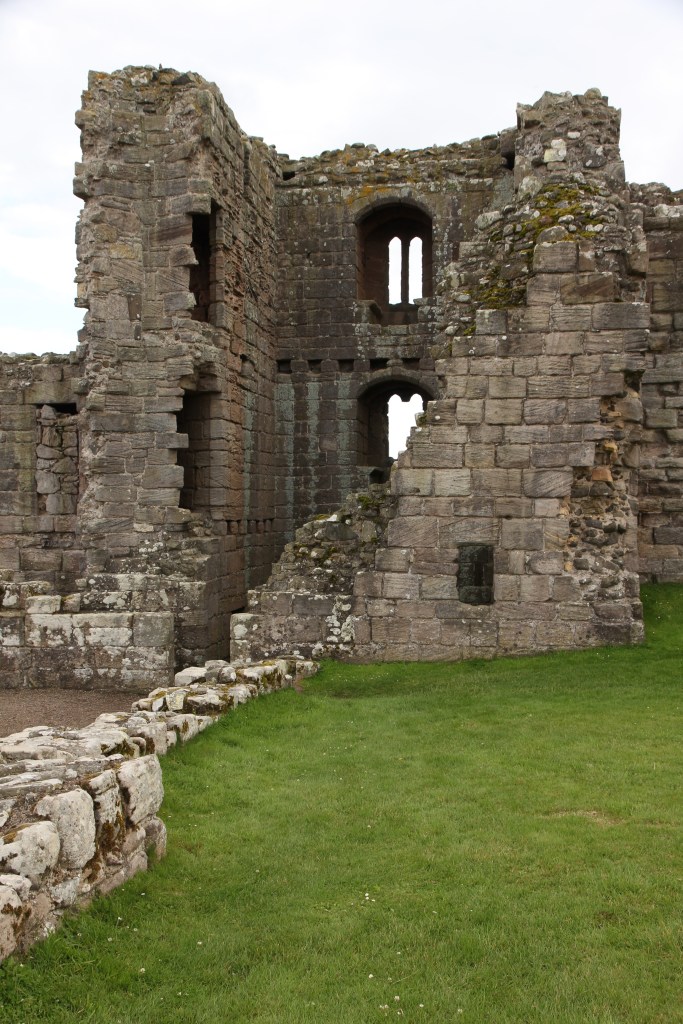
The Constable’s Tower in the south curtain wall was part of Thomas’s original design, but was expanded later into a larger house. I couldn’t help wondering whether Lilburn and Maudit, joint constables in 1322, would have scowled at each other across the bailey from their respective accommodation…
As for Dunstanburgh, the castle was handed back to the Lancaster family in 1326, firstly to Earl Henry, Thomas’s younger brother. It then passed to John of Gaunt (1340-99), one of the greatest Dukes of Lancaster. Gaunt put his own stamp on the place in the 1380’s when he too needed a northern refuge, although this time it wasn’t from the king he was running, but from the peasants whose revolt was raging in the south.
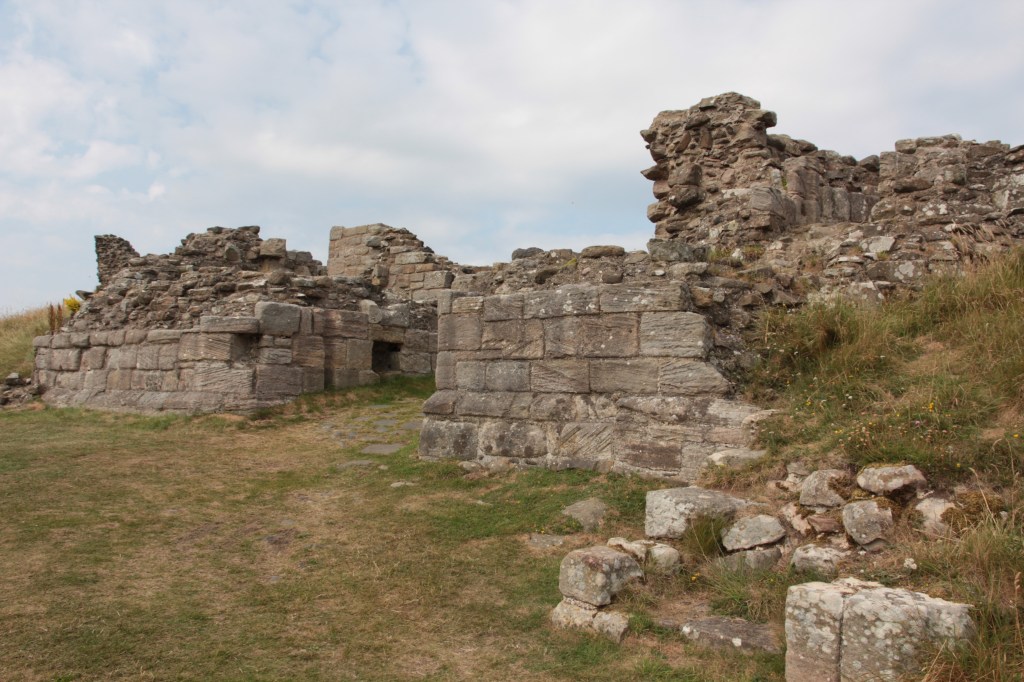
The remains of Gaunt’s gatehouse, which he added in 1383. Smaller and less imposing, Gaunt had Thomas’s grand entrance sealed off and turned into a keep.
But whatever improvements Gaunt made to the design, today the standout landmark of the area is undoubtedly the jagged remains of Thomas’s great gatehouse. Still gazing out to the North Sea past the now vanished harbour, this awe-inspiring gateway to the earl’s own Avalon remains an eternal reminder of Thomas’s ambition and defiance. For us, any time spent wandering around Dunstanburgh is a real pleasure, and our visit this summer was no exception. And as we walked back along the coast to Craster on the most glorious summer evening, we all agreed on an ambition of our own: to return to this remote and historic haven for many, many years to come.
 medievalwanderings.com
How on earth Lilburn manged to survive into his seventies I’ll never know – what a character – the stuff of Saturday night television! Another wonderfully atmospheric post my love, very well written – Dunstanburgh is a wonderful place and that was a fantastic visit. Next time we’ll take a bottle of mead with us and drink a toast to the two Traitors!
LikeLiked by 1 person
Sounds a wonderful idea! 🙂 There are so many characters and events that would make great dramas, and they don’t need embellishing for TV – the stories are amazing enough just as they are! 🙂
LikeLiked by 1 person
Just so long as they feature lots of swashbuckling! 😀
LikeLiked by 1 person
…well you’ve just read this post, how could there not be! 😁
LikeLiked by 1 person
lol! 😀 And lots of mead! It would make a really good series actually. I sure he had some merry (or not so merry) men around him.
LikeLiked by 1 person
I doubt Roger Maudit was very merry! 😉
LikeLiked by 1 person
Well he does sound quite Maud lin… 😀
LikeLiked by 1 person
Oh well done… groan! 😉
LikeLiked by 1 person
I do try 😀
LikeLiked by 1 person
Fascinating history from a fascinating county. Lovely stuff!
LikeLiked by 1 person
Thanks John, I’m glad you enjoyed our wander around Dunstanburgh and getting to know its medieval reprobates. Northumberland is a very special county, and as you say, it has a fascinating history too.
LikeLiked by 1 person
Ah, Dunstanburgh is one of my own favourite castles too! I knew all about Thomas but Lilburn had somehow passed me by so this was an interesting read as well as transporting me briefly to this wonderful spot 😀
LikeLiked by 1 person
Only too happy to transport you to a place I know you appreciate, and to have expanded your knowledge about the characters whose stories are woven into the castle. It is more than a bit special, isn’t it? 🙂
LikeLiked by 1 person
It is indeed, and under-appreciated I reckon, compared to Alnwick and Bamburgh (both great in their ways but very different)
LikeLike
Fascinating!!! Thank you, Alli!
LikeLiked by 1 person
Thanks Martha, glad you enjoyed it. 🙂
LikeLiked by 1 person
Perhaps Thomas named it Lilburn Tower as he planned to throw him off it! 😉
The start of your post reminded me that, now I’m finally retired, I could make a start on Hadrians Wall!
LikeLiked by 3 people
Love that comment, Carol! 😀 That would have been a good plan, especially as the Lilburn Tower is pretty much on the highest point of the castle site!
I’d love to do Hadrian’s Wall too, as well as several other long-distance paths, like St Cuthbert’s Way, which I’d really love to do. But Hadrian’s Wall would make a fantastic new challenge for you, especially now you have the time. Hope you’re well on the mend now and regaining some energy. If you’re thinking like this though, that’s got to be a good sign. 🙂
LikeLiked by 1 person
I’m actually feeling quite a bit better. I’m still mostly doing small hills but have done a few rounds of ‘big ones’ the last week or so and, today, tackled my garden which hasn’t been touched all summer. Took me all day! Still only about half done.
LikeLiked by 1 person
Ah, that’s great news, Carol. I had a feeling you would with a bit of time, a good rest and, of course, some decent ice cream! 😉 Gardens don’t take long to get out of hand, do they? I know what you mean there. Trouble is, there hasn’t been much in the way of decent weather to get out and dig either. Well done for getting started on sorting yours out though. Sounds as though you’re approaching your full recovery very sensibly, so as long as you listen to your body and pace yourself, you’ll be out there doing Hadrian’s Wall before you know it! 🙂
LikeLiked by 1 person
Richard also wants to do Hadrian’s Wall (in parts like I intend to) but he’s having terrible trouble with either his knees, hips or feet – they all seem to take it in turns!
LikeLiked by 1 person
Oh dear, poor chap. Sections of the wall would be prudent then. After all, it is 73 miles long. At least you live in the right place to do it in sections to suit you both. 🙂
LikeLike
Yep – pretty good location to get at any part of it really 🙂
LikeLiked by 1 person
Ah yes, I envy you that. 🙂
LikeLike
Well you live in a superb location – I must get back to Wales next year!
LikeLiked by 1 person
True indeed. In fact, we’re off to see the dragons at Dinas Emrys today with a picnic as it’s such a nice day. Looking forward to showing you the place when you do make it over here! 🙂
LikeLiked by 1 person
I thoroughly enjoyed this visit to Dunstanburgh Castle Alli, especially with the way you’ve brought it all to life – but then you always do. It’s interesting to read that some experts think of it as the Earl of Lancaster’s Isle of Avalon, and it would be even more interesting to find out if that’s how Thomas thought of it himself.
It was good to see how you incorporated the earl’s tussle with the king and his cronies, but Sir John de Lilburn is a character I’ve not come across before. He seems to have had all the dubious attributes to enable him to live a long, and no doubt prosperous life – just like some people manage to do today.
I’m also glad that you mentioned the coastline and birdlife, because the location also helps make Dunstanburgh special. Another great post Alli and I’m hoping there’s more to come from your trip to Northumberland 😊
LikeLiked by 1 person
Thanks for the lovely comments, as always Malc, and I’m glad you enjoyed taking a turn around Dunstanburgh with me and even learning something new. Lilburn really was a character, wasn’t he?
It is a very special place indeed,
Regarding Thomas and whether he thought of the castle being likened to Avalon, that’s a very interesting question. I may be able to
help a little there, or perhaps more like thicken the plot! Of course, the Arthurian stories were massively popular in the middle ages, and many nobles and kings were keen to emulate the mythical hero, so Thomas may well have thought of his designs for Dunstanburgh that way. On the other hand, as strong defences would have been very high on the agenda for the castle’s construction, the fact that it was surrounded by water – both sea and man-made lakes – might have been a happy coincidence, which he may have realised later and then planned to capitalise on the image. Intriguingly, on yet another hand, it’s known that he used a codename in his treacherous dealings with the Scots, and that was ‘King Arthur’. This must have come out though, because at his trial in 1322 before his execution, he was addressed with the taunt ‘Oh King Arthur, most dreadful’. So he may well have wanted to portray himself as Arthur, and therefore, perhaps Dunstanburgh was supposed to resemble Avalon too! 🙂
LikeLiked by 1 person
This King Arthur connection is intriguing, and something I wasn’t aware of until reading this post. As for Lilburn, I didn’t even know that the tower was named after him, as on my only visit there, the castle was closed and so I didn’t get the chance to explore inside. Still! I know all about it now, so you’re due another big thank you 😊
LikeLiked by 1 person
I hope you have better luck getting into the castle next time you’re up that way, Malc. It’s really worth a visit, not just for the history but for the views and the nature. A very special place. 🙂
LikeLiked by 2 people