Last week we met the fascinating character of Hubert de Burgh (d.1243) and discovered his links to the Three Castles, a medieval lordship in the southern Welsh March that he held – on and off – between 1201 and 1239. So having learned a little of the man and his eventful career serving two Plantagenet kings, join me now on our whistle-stop tour of his trio of border fortresses.
Grosmont Castle
It was pouring with rain when we reached our first destination, but I never let a bit of bad weather keep me from a castle. The enthusiastic precipitation and dull light made for less than perfect conditions for photography, so please excuse the awful pictures!
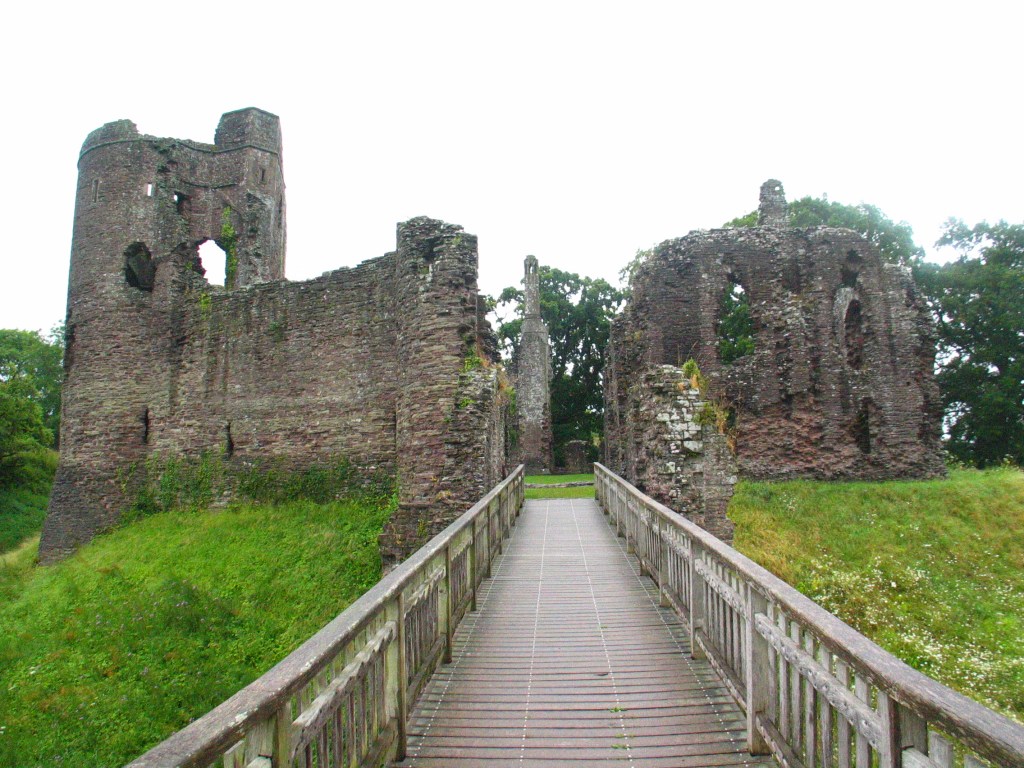
Grosmont Castle is reached across a modern bridge across the defensive ditch that follows the original medieval line to the gatehouse.
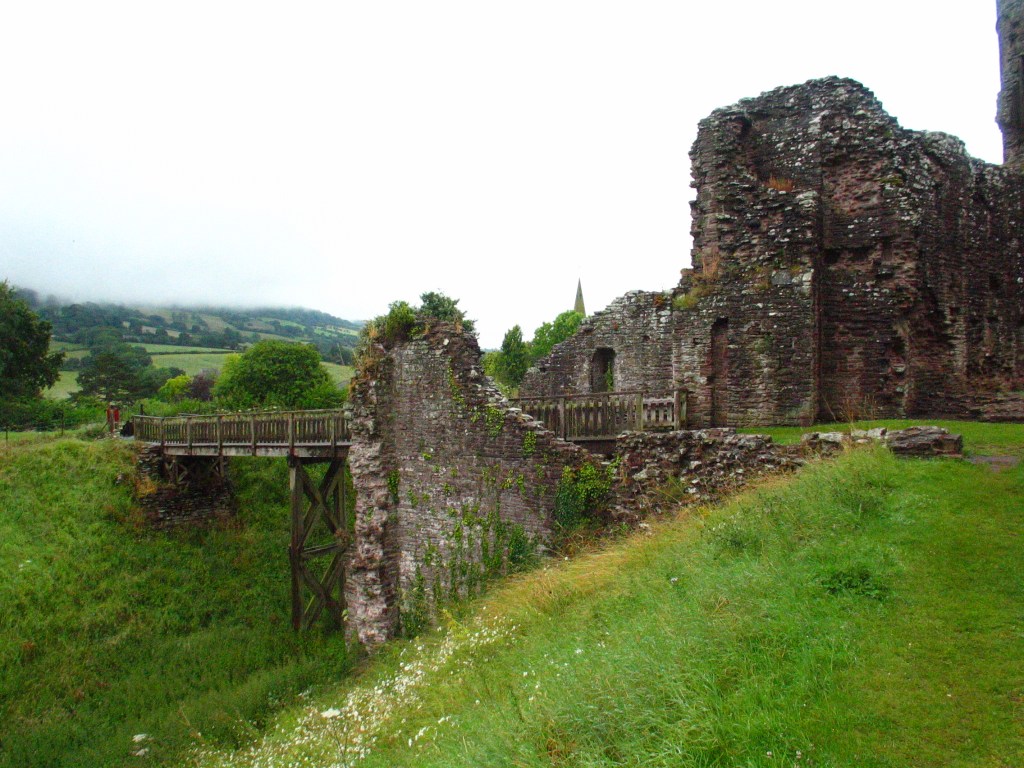
Looking back across the bridge from the castle. There was once an earthwork outer ward, although this is harder to make out today as much of it is concealed under the nearby garden boundaries of the modern village.
Grosmont sits on it’s original Norman motte looking down over the village that was once a medieval borough. When Hubert took possession of the Three Castles, Grosmont and Skenfrith were still of earth and timber construction, so he would have turned his thoughts pretty swiftly to improving the defenses and rebuilding them in stone. In addition, he’d have wanted to carry out some home improvements, and this is most evident at Grosmont with his earliest project; a prestigious two-storey hall block.

The castle sits above the modern village of Grosmont that was once a medieval borourgh.

Looking across the inner ward to Hubert’s hall block, which he started soon after he was granted the Three Castles in 1201.
The first floor was the focus of life at the castle, divided into two spaces by a full-height wooden screen. The great hall itself was the public room where gatherings, meals and entertainment took place, while the adjacent chamber was a more private space, known as a solar, for the family to retire to and relax. It would have been a luxurious and comfortable new residence if he’d had a chance to enjoy it before he was sent off to France.
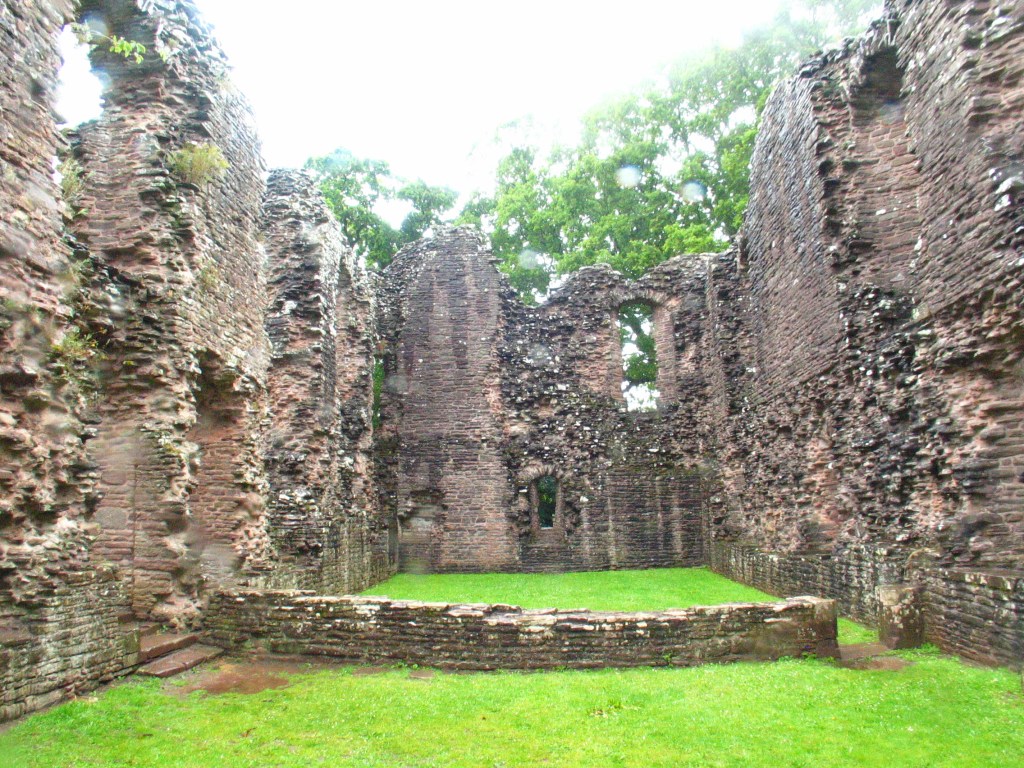
Inside Hubert’s grand hall block. The main accommodation, entered via an external wooden stair from the courtyard, would have been on the first floor. The ‘solar’ is at the far end and the great hall in the foreground, with its warming fireplace visible on the right.

Sheltering from the rain in Hubert’s hall block!

The curtain walls and towers, built by Hubert to replace the old wooden palisade.
The curtain walls and towers were also added by Hubert, although he built these later, after 1219 when he regained the castles. But the south-west tower and north range we see today are largely the result of a remodeling in the fourteenth century by the earls of Lancaster, who left their own distinctive mark on the place. To make way for a suite of posh apartments befitting their noble status, they pulled down Hubert’s northern round tower and postern gate, and had a new rectangular tower built outside the line of the earlier curtain wall. The north block is now heavily ruined, save for one striking chimney. Tall and octagonal in shape with an elegantly ornamented top, this remaining feature gives us an idea of just how opulent this fourteenth century north block would have been. However, Hubert’s original hall block still holds its own today as the largest surviving building at Grosmont, so this must have been impressive enough for the Lancastrians just as it was.
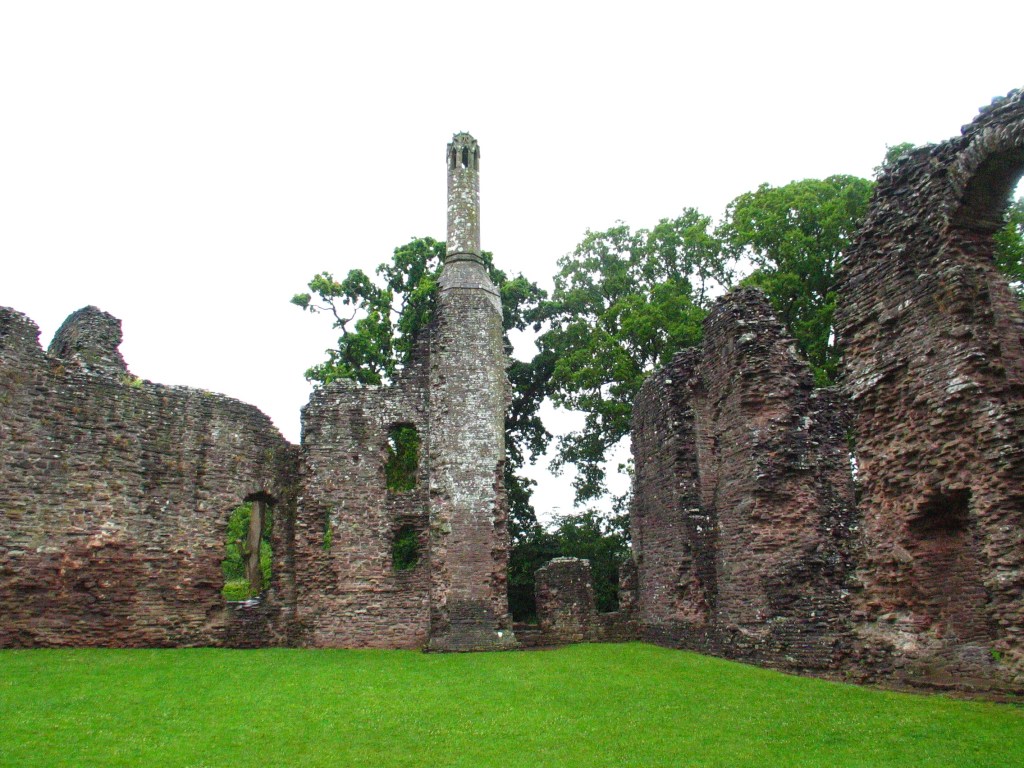
The fourteenth century remodeled north block built by the earls of Lancaster, with their elegant lofty chimney. Hubert’s hall block is on the right.
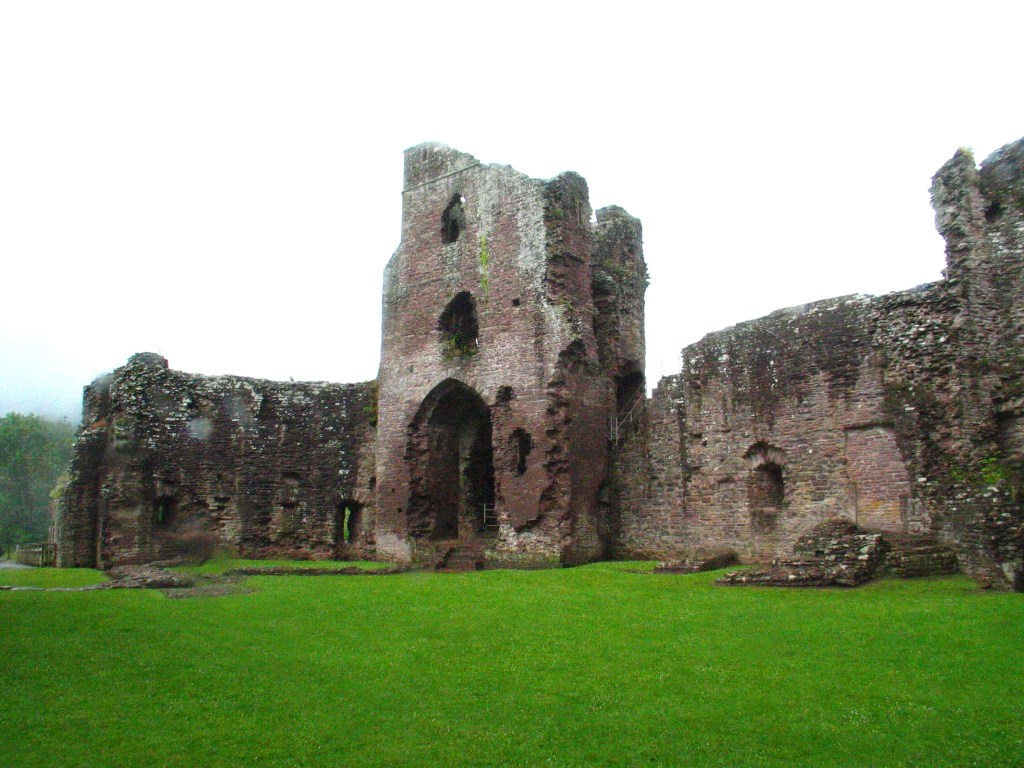
The south west tower was part of Hubert’s 1219 rebuild, but was remodeled by the Lancastrian earls to include a higher-status arched entrance and accommodation.
So having poked around Grosmont in the rain, we moved on to White Castle…
White Castle
Luckily, the rain had stopped by the time we got to our next destination, so this time we avoided taking on the appearance of drowned castle rats.
Situated around seven miles south west of Grosmont, White Castle is the furthest of the three from the English border, and so closer to territory ruled by Welsh lords. As a consequence, it needed stronger defences than the original earth and timber constructions, so by the time White came into Hubert’s ownership there was already a solid stone curtain wall and a square tower in place. He must have been pleased to discover there wasn’t, in fact, much to do here at all, except move in.

White Castle was ready-made in stone when Hubert took possession of it in 1201.
Most of what we see today, however, is the work of Prince Edward, later Edward I (r.1272-1307), after he was granted the Three Castles by his father, Henry III. By the mid thirteenth century, the threat from the Welsh was growing, so in the 1260’s, in preparation for a possible attack, Edward gave White Castle’s now out-of-date defences a massive upgrade. He added round towers to the curtain wall and a huge outer ward to house a defending army camp. This made White the biggest of the Three Castles by far, but as it turned out, the attack never materialised. The main threat, Llywelyn ap Gruffudd, died in 1282 during a skirmish at Builth, and the castle never saw action.
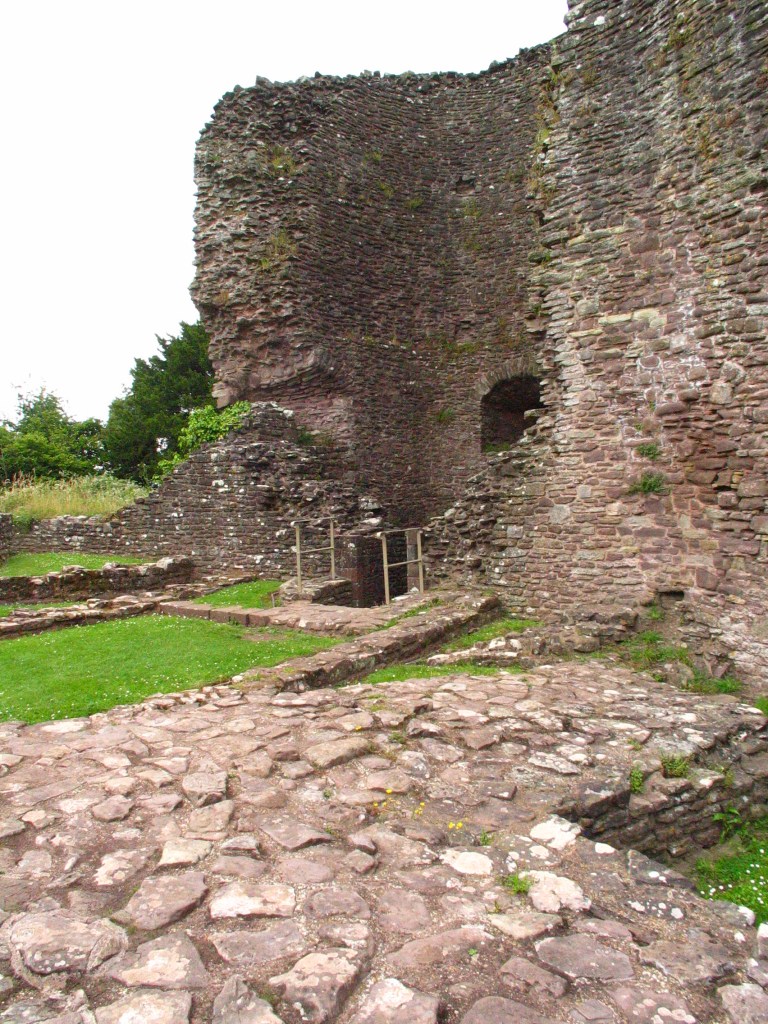
The substantial square foundations in the foreground are the original tower inherited by Hubert, as is the curtain wall, but the round towers were added by Edward.
Today we enter White Castle via a bridge spanning a ditch, through the outer gatehouse and into Edward’s sizeable outer ward. Then we cross another ditch, once a wet moat, through the main gatehouse and into the inner ward. However, this wasn’t the original entrance. Hubert’s gatehouse was on the opposite southern side of the curtain wall, with a bridge spanning the moat leading to the earlier crescent-shaped defensive enclosure still visible today.

The castle is approached across Edward’s huge outer ward.
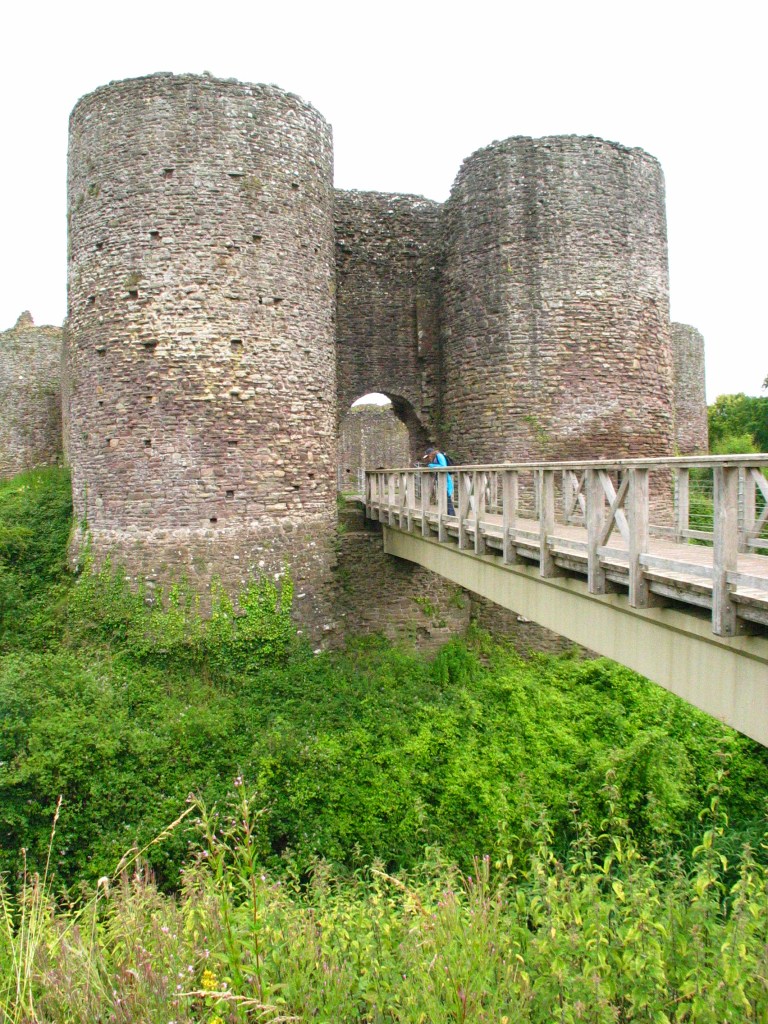
The main gatehouse to the inner ward crosses a ditch that was once a wet moat.
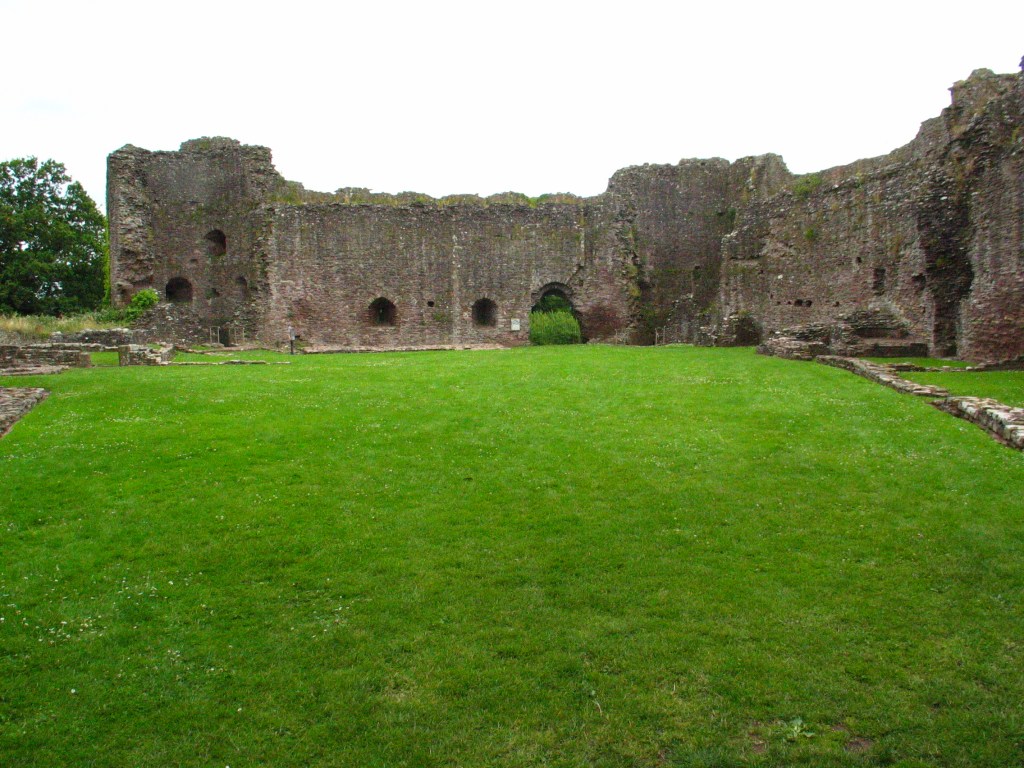
White’s large inner ward.
It’s generally thought that White was purely a defensive fortress owing to its lack of high-status accommodation. Whilst it’s true that the position of the castle, close as it was to Welsh held territory, meant that it’s defence would have been the main priority, the presence of foundations of two phases of a great hall, a chapel and accommodation tower, together with the remains of a kitchen, malthouse and bakehouse suggest that the castle had good domestic provision and that at least some degree of comfort was enjoyed here. Further evidence comes from a delightful thirteenth century bone flute found in the moat during an archaeological excavation, suggesting that there must have been rather more than just military activities taking place at White Castle. I could almost hear its haunting notes entertaining the castle’s residents…

The foundations of domestic buildings at White include the malthouse, bakehouse and kitchen.

The chapel tower, with it’s second floor chapel, tended to the spiritual needs of the castle’s inhabitants.

The delightful thirteenth century bone flute recovered from the moat. (Source)
Onwards, then, to the final stop on our tour as we headed back towards the border with England.
Skenfrith Castle
Arriving in bright early evening sunshine, we entered Skenfrith via a modern stair through a large gap in the crumbled remains of the north curtain wall, but the view of the castle in front of us and the backdrop of rolling hills was perhaps the most inviting of the whole trip.

What a view! Skenfrith Castle in it’s beautiful setting.
Skenfrith sits on low ground beside the River Monmow, which runs along the eastern edge of the castle and once lapped at the walls and filled a moat that ran along the north and west sides. A simple layout that nevertheless incorporated the latest trends in thirteenth century castle design, Skenfrith consists of a roughly rectangular curtain wall with round corner towers and an imposing central circular keep. There is no great gatehouse or protective outer ward here, but what I love about Skenfrith is that, apart from one later tower located mid way along the western wall, everything we see today is Hubert’s work, with nothing else to break the lines of his building revamp between 1219 and 1232.
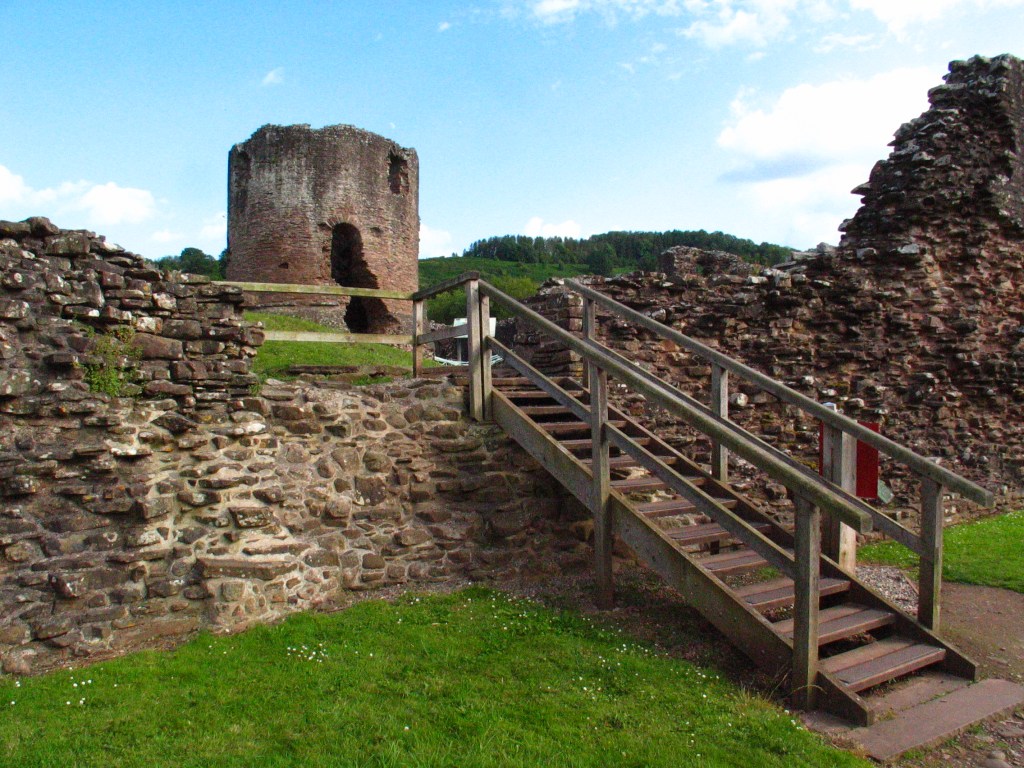
Built to protect important river crossings between England and Wales, Skenfrith Castle is entered via a modern stair through a big gap in the ruined northern wall that would once have been Hubert’s gatehouse.

The River Monmow runs alongside the castle, just outside the eastern wall.
Hubert levelled the old earth and timber castle in order to rebuild in stone, but the site itself had distinct advantages and disadvantages. Although the river and moat were good defensive features, the low ground and proximity to the river could lead to winter flooding. Hubert used the debris from the original castle to create a higher platform to raise the buildings above the flood plain. Further measures were taken in the fourteenth century, but it seems that intermittent flooding remained a problem throughout the Middle Ages, as it still does today.
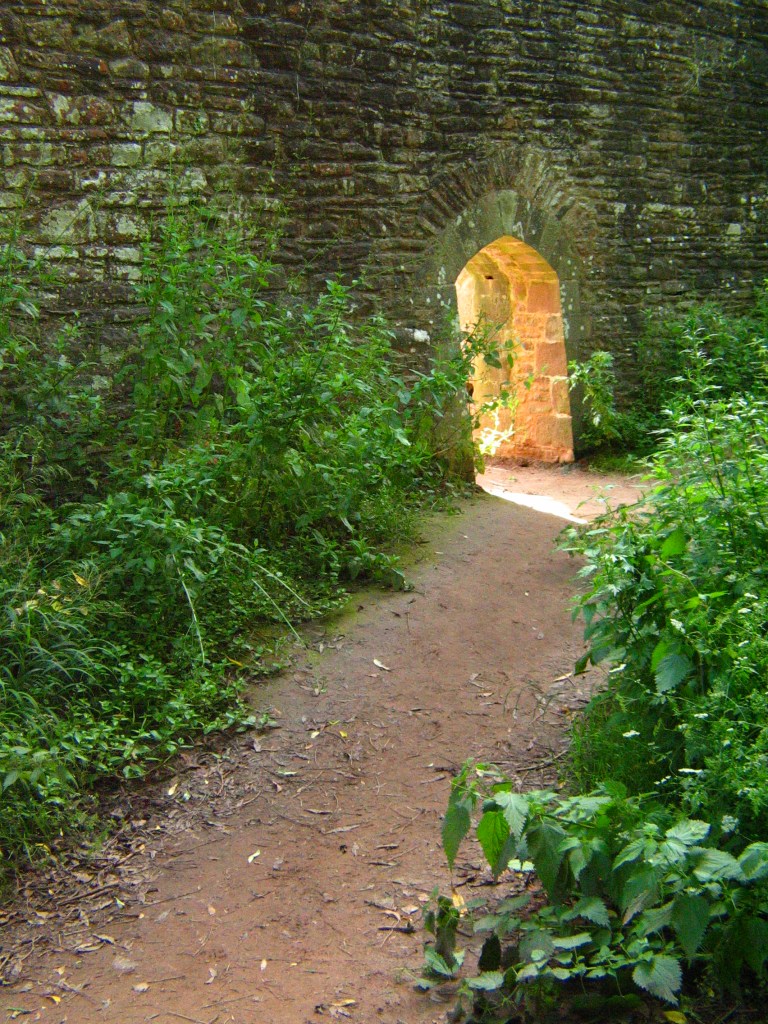
The watergate, which lies down a flight of steps from the courtyard, gave access to the river. Archaeological excavations in 2003 uncovered the remains of a substantial medieval wharf a little further upstream.

The remains of the western hall block, which contained a series of high quality chambers.
Another problem with a position on low ground was the surrounding hills that offered a strategic advantage to any potential attackers. To address any threat, Hubert constructed the towers and keep to the latest circular design, which solved the problem of the vulnerable corners of the old square buildings. Then there would have been a covered high wooden platform along the inside of the curtain walls to allow defenders to keep watch and stay protected whilst returning fire. The raised keep would likely also have been crowned with a circular wooden fighting deck, providing a high lookout point and a 360° field of fire.

Hubert’s imposing central keep, entered at first floor level via an external stair, offered protection from both attackers and floods!
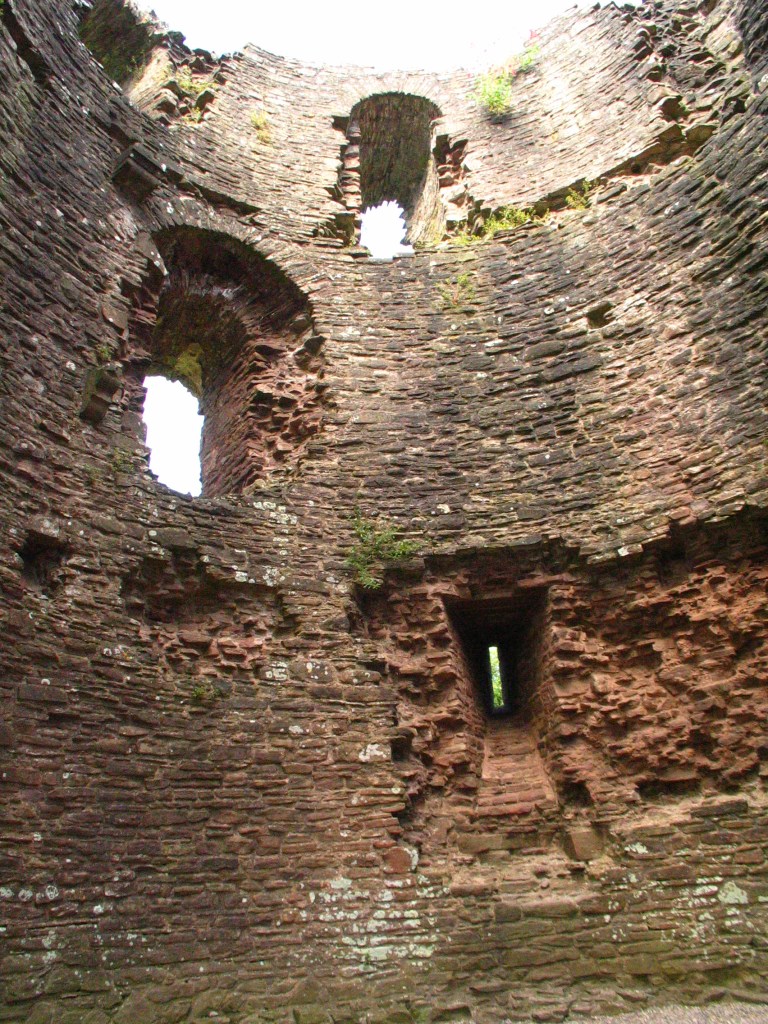
The interior of the keep. Hubert’s private accommodation would have been on the first and second floors.

The remains of a fireplace that would have kept Hubert warm in his second floor bedchamber.
Wandering around this most complete example of Hubert’s works at his Three Castles, I really felt a sense of the man, and could well imagine him ensconced by the fire in his prestigious second floor bedchamber, keeping warm and dry, high above the encroaching water. And so, bidding a fond farewell to Hubert and his splendid castles, we headed back across the Wye to England to find a sunny riverside hostelry to toast this remarkable man.
The Three Castles lordship was very special to Hubert, something we know from a well-informed contemporary chronicler, Matthew Paris. Writing of Hubert’s later troubles, he mentions Grosmont, White and Skenfrith by name which, along with one other estate in Essex, Hubert ‘loved above all others, and on which he had spent an infinity of money’.
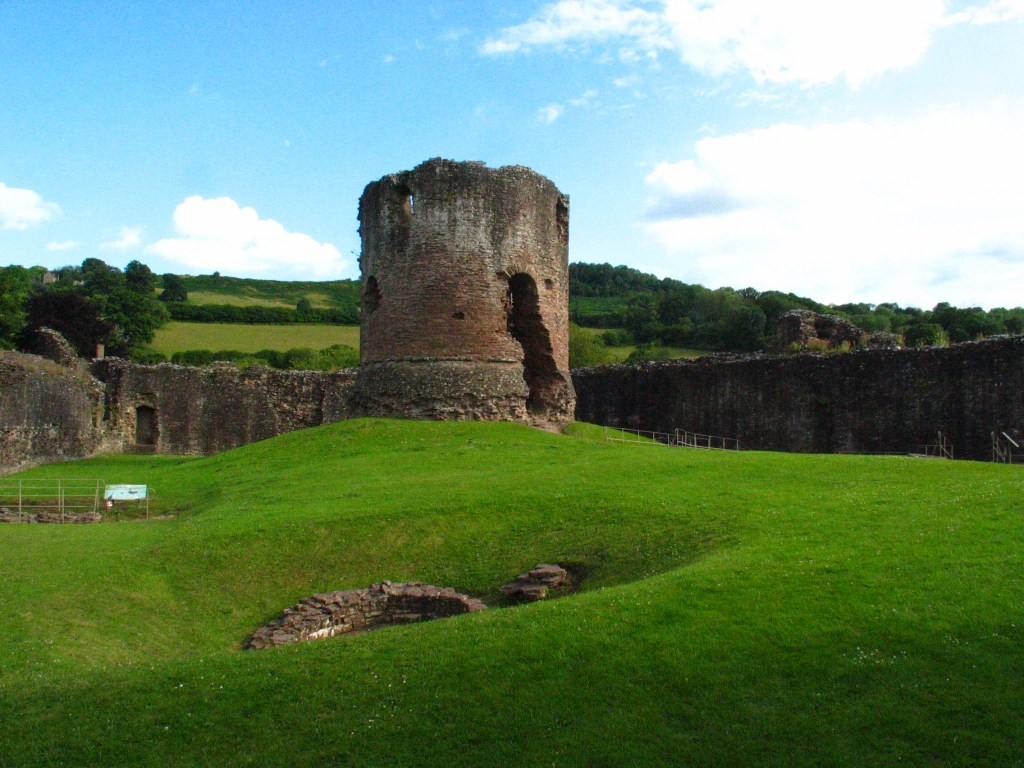
Poor Hubert spent a great deal of money on the Three Castles he wasn’t allowed to keep…
Interestingly, during the course of his rollercoaster of a career, Hubert lost his Three Castles a total of three times, and he is known to have visited them on at least three occasions between 1220 and 1222, most likely to see how his rebuilds at Skenfrith and Grosmont were coming on. And I very much hope to visit his Three Castles at least three times more myself, but in future I intend to linger much longer at each. There’s even an enticing 20-mile Three Castles Walk I’d like to do. Either way, I’m certain that next time our tour will be a lot less ‘whistle’ and a lot more ‘stop’…

 medievalwanderings.com
Thanks my love for a wonderful reminder of such a fab day, and the three excellent castles! I can really see why Hubert loved them so much – I still think it’s rather sad that he lost them.
I’m all in favour of several re-visits, and a lot more ‘stopping’ when we’re there, along with some eating and quaffing whilst we’re at it. Hopefully to the sounds of some ghostly flute music.
LikeLiked by 1 person
It was good fun, wasn’t it, even at the start in the rain! A wonderful way to spend an afternoon. Yes, we need longer visits next time though, so looking forward to some more quality time at each. And the otherworldly flute music? Yes please! 😀
LikeLiked by 1 person
😀 We need to find the chap from York to play for us! I’m sure he’ll do us a good job for a batch of Brownies!
LikeLike
I know it’s difficult to take photos in the rain, but I think Grosmont looks quite atmospheric like that, and I’m sure Hubert loved it in all weathers! However that blue sky as a backdrop to Skenfrith is rather lovely 🙂 I hope you get to go back for more thorough explorations.
LikeLiked by 2 people
Funnily you should say that, Sarah,, as I have the same thoughts about castles and other ancient sites in bad weather. Photos aside, I almost prefer castles in poor weather as; a) they tend to me much quieter, and b) they really are hugely atmospheric. I am, though, thrilled to bits to see that a photographer of your standard thinks Grosmont looks atmospheric in our soggy attempts to capture it! You’re absolutely right though, you could have cut the atmosphere with a knife that day (in a good way, that is!). Many thanks for the lovely comments, it’s very much appreciated. 🙂 I’m already looking forward to going back to Hubert’s Three Castles for a longer exploration. 🙂
LikeLiked by 1 person
I think a lot of antiquities suit bad weather photography – more atmospheric somehow. I also like the old Welsh slate quarries in the rain.
LikeLiked by 2 people
I agree, Carol. There’s something about poor weather that brings all the history, atmosphere and ghosts out of the stones, and a mist can really enhance the scene. I think I need to work on my photographic technique though, as getting the right feel in adverse conditions can be a real challenge – for me anyway! 🙂
LikeLiked by 1 person
mists are wonderful for adding atmosphere – I used to often go out for a stroll quite late at night if it was misty and really enjoyed it.
LikeLiked by 1 person
Oh wow, I’ll bet walking at night gives you a very different perspective on the world, especially with a mist thrown in! Incredibly atmospheric! You must have felt you were walking with spirits as well as the wildlife. 🙂
LikeLike
it was very atmospheric and I loved it. Not sure why I don’t do it now – I always seem too busy nowadays even though I’m retired! And also I’ve usually had enough after my day’s hillwalk.
LikeLiked by 1 person
I suppose you need to consider safety as well, nowadays. The world isn’t the same safe place as it used to be. Still sounds amazing though. Have you heard of the book, ‘Nightwalks’ by John Lewis-Stempel? Maddie has just finished reading it and says it’s really good.
LikeLike
it would be pretty safe around here – too rural for any bad folks to bother to come all the way out here. Haven’t heard of that book but it sounds really interesting.
LikeLiked by 1 person
We’re planning on living somewhere as rural as you next time. Roll on then…
Got the name wrong, apologies, it’s ‘Nightwalking: Four Journeys into Britain After Dark’. Maybe I’ll have to read it too. 🙂
LikeLike
I do hope you are going to write a book please?
LikeLiked by 2 people
John, thank you so much. That’s quite probably the nicest comment I’ve ever had. I’m quite choked! Funnily enough, I have been turning my thoughts to a book or two, now that I’ve been doing this blog for over six years. Time to branch out, I’ve been thinking. So this, coming from someone of your talents and experience, is both timely and hugely encouraging. Many thanks again. It means a great deal.
LikeLiked by 1 person
I think it’s a great idea!!!!
LikeLiked by 1 person
Oh wow, Martha, you too! Thank you so much! With two creative forces of nature encouraging me, I feel I’ll have to go for it! 🙂
LikeLiked by 1 person
❤️ Yes!
LikeLiked by 1 person
Thank you, Martha. ❤️
LikeLiked by 1 person
There’s a terrific market for British history. One of the bestselling genres, Well worth a go,
LikeLiked by 1 person
Is there? Wow, I didn’t realise. That’s potentially good news then. Thanks, John.
LikeLiked by 1 person
Worth taking a look at, say, Waterstones’ history section. Those are the publishers to pitch to.
LikeLiked by 1 person
We have a Waterstones in Llandudno. It’s an intimidating thought nowadays, pitching to a publisher, when the industry is so hard-bitten and you’re competing against so many others. I sometimes wonder about just doing my own thing? Any thoughts on that?
LikeLiked by 1 person
We do our own Indie publishing, though you are competing with a lot of others, I would have thought from your blogs you could get a mainstream publisher if the book had a terrific theme. I’ve done trad publishing as well as going Indie, Happy to advise,
LikeLiked by 1 person
Goodness, thanks again John, that’s very helpful and encouraging. If you don’t mind I may well take you up on your kind offer of advice at some point. Thanks again.
LikeLiked by 1 person
Please do.
LikeLiked by 1 person
Thanks John.
LikeLike
It is difficult to get traction with non-fiction as an Indie. I sell mine but not many – the novels do better, Worth looking at the History Press etc. as a starter. You need an angle – a USP – on some aspect of history, Worth looking at Pen and Sword perhaps.
LikeLiked by 1 person
I see, lots of food for thought here then. I’ll do some research and see where it takes me. Very many thanks again, John.
LikeLiked by 1 person
If you go Indie, watch out for fake vanity publishers, editors, publicists, cover designers etc. who target Indies. All asking for money. We’ve not paid a penny to anyone else, bar licensed cover pictures from Shutterstock.
LikeLiked by 1 person
Oh good grief, thanks for the warning. Definitely need to look more into that then, even just as a precaution.
LikeLiked by 1 person
The 3 Castle walk sounds great! Skenfrith does look the most picturesque and lovely to see the beautiful river right behind – but you’re right it does come with plenty of problems.
I’d love to hear the bone flute played – I was puzzled and intrigued by all the extra holes all over its body so I can’t imagine how it would sound.
Those moats all look really deep. The photos are fine and really show the once greatness of the castles.
LikeLiked by 1 person
The Three Castles Walk really appeals. It’s around twenty miles in length, but look at the wonderful stops you get along the way! That area outside Skenfrith’s castle walls along the river was really beautiful. Wooded paths and peace aplenty.
I was intrigued by the bone flute too. Musical instruments are sadly not one of my specialities, but it looks to me like some form of decoration. Maybe the owner/maker was particularly talented and wanted to show off his skill and embellish his instrument so it looked, as well as sounded good. Just a guess, but it’s certainly a fascinating little object, no doubt with lots of stories to tell.
The moats are deep indeed, and perhaps even more impressive when you think that over the centuries there would have been a fair bit of backfill build up, and of course the plant life has grown up in it. So they most likely would have been even deeper in their heyday. 🙂
LikeLiked by 1 person
ah – I never thought of the apparent holes in the flute just being decoration. I suppose you have to see it really…
LikeLiked by 1 person
Yes, there’s nothing like actually meeting and examining a real artefact. I’d love to meet this one! 🙂
LikeLiked by 1 person
was it locked in a cabinet or something?
LikeLike
I think it’s in the collection of St Fagan’s National Museum of History in Cardiff, but I’m not sure whether it’s on display at the moment or stored away in their archive. It was originally found in the moat at White Castle, and presumably then it was cleaned up and transferred to Cardiff. I’d love to see it though, so maybe I’ll have to take myself off to Cardiff before long. 🙂
LikeLiked by 1 person
I’ve never been to Cardiff – I’d love to visit the capital of Wales!
LikeLiked by 1 person
Me neither, but there’s supposed to be a lot to do and see there. 🙂
LikeLike