Since I began blogging early in 2019, I’ve often referred to the ‘madness of the modern world’. It’s how I’ve felt for a long time. But as I write today, in the autumn of 2026, I think it could safely be said that those words have never been more apt. It feels as though the world has gone into freefall, as we edge ever closer to ecological and civilisational collapse. Yet still humanity buries its collective head deep in the sand, refusing to wake up to the approaching crises, but rather pressing on regardless with its destructive ways.
My coping mechanism for the anxiety all this causes has always been to escape to the Middle Ages by studying, researching and immersing myself in the period. But in recent years things have shifted slightly, and I’ve found more and more solace in nature. It’s always been important to me, but my deepening connection with nature has given rise to a second, equally strong passion. After all, the natural world is where we are supposed to be, and despite humankind’s best efforts to control, exploit and destroy it, the fundamental, inescapable truth is that we’re a part of it. So I suppose, to an extent I’ve changed, or perhaps more accurately, I’ve evolved. That said, there is a significant link between my two great loves, and this came to the fore recently in a subtle but impactful way.
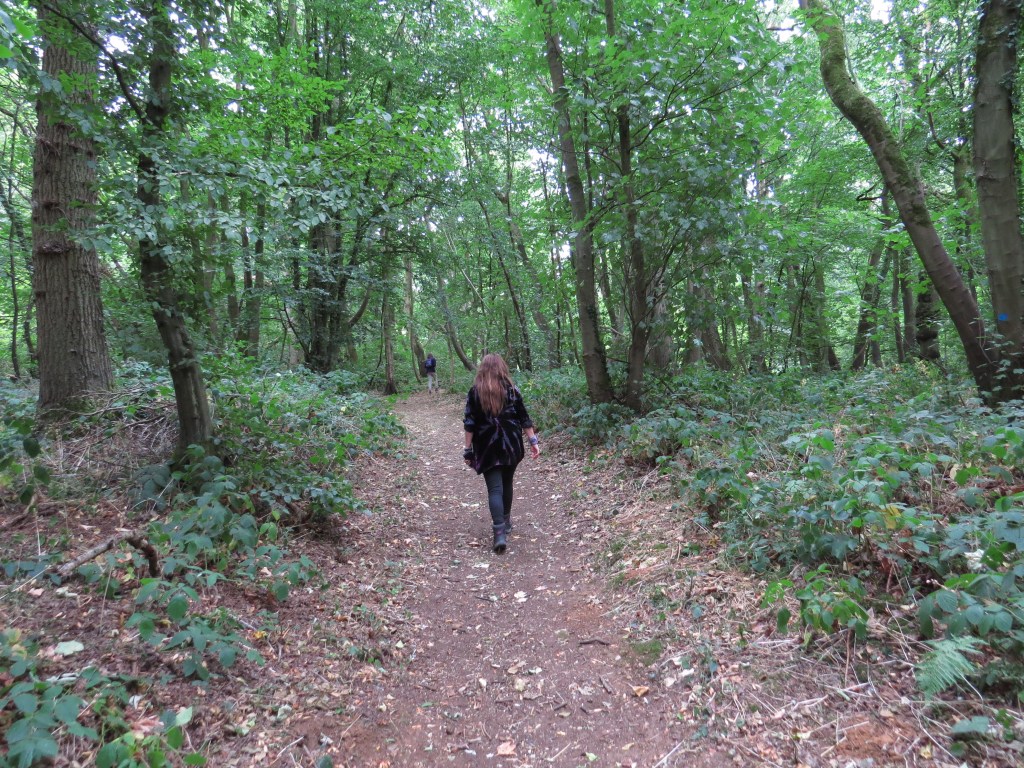
Nature is now my other, equally great love
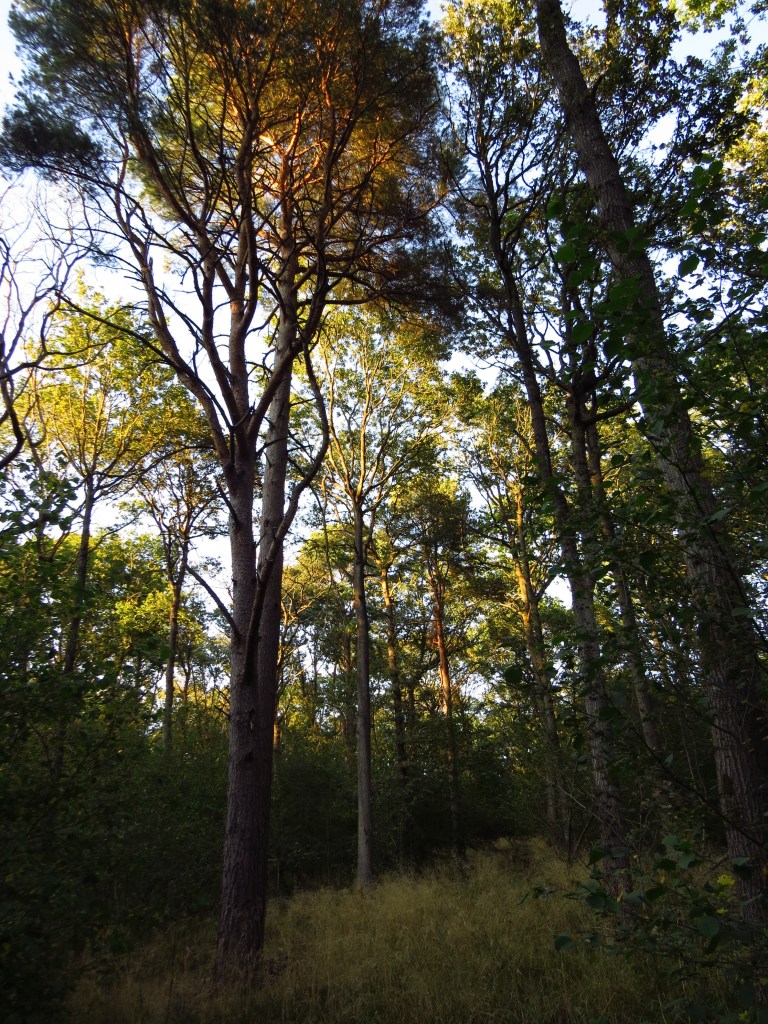
It’s hard to beat the dappled evening light in a woodland for a much-needed dose of solace…
As someone who finds the trappings of the modern human-constructed world increasingly overwhelming, these days I prefer to live a much simpler and slower-paced life. This involves spending as much time as possible in nature, in remote places among the trees and the wildlife, where I can find relief from the relentless noise and chaos. In many ways this lifestyle change ties in well with my beloved Middle Ages; a time before social media, plastic, man-made chemicals and AI, when folk were intimately connected with the Earth and the changing seasons.
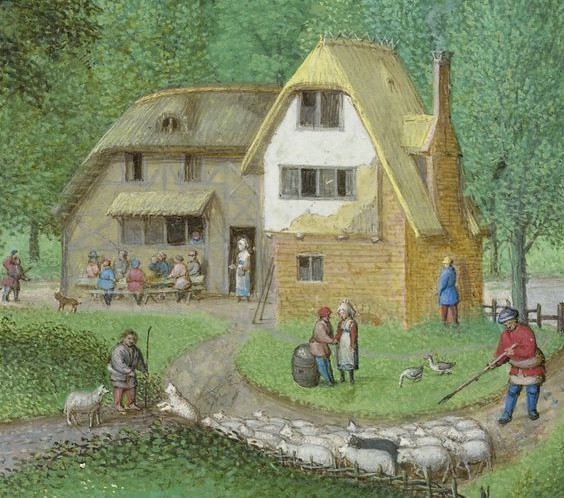
Life in the Middle Ages had it’s problems and issues, of course, but at least life was simpler and more in touch with nature.
With this year’s long and unbearably hot summer finally behind us I’ve been making more time to read, and a few weeks ago I came across a particular early medieval poem that has firmly taken root in my mind. I keep going back to it again and again, because it seems to express exactly how I feel, even over a thousand years after it was written.
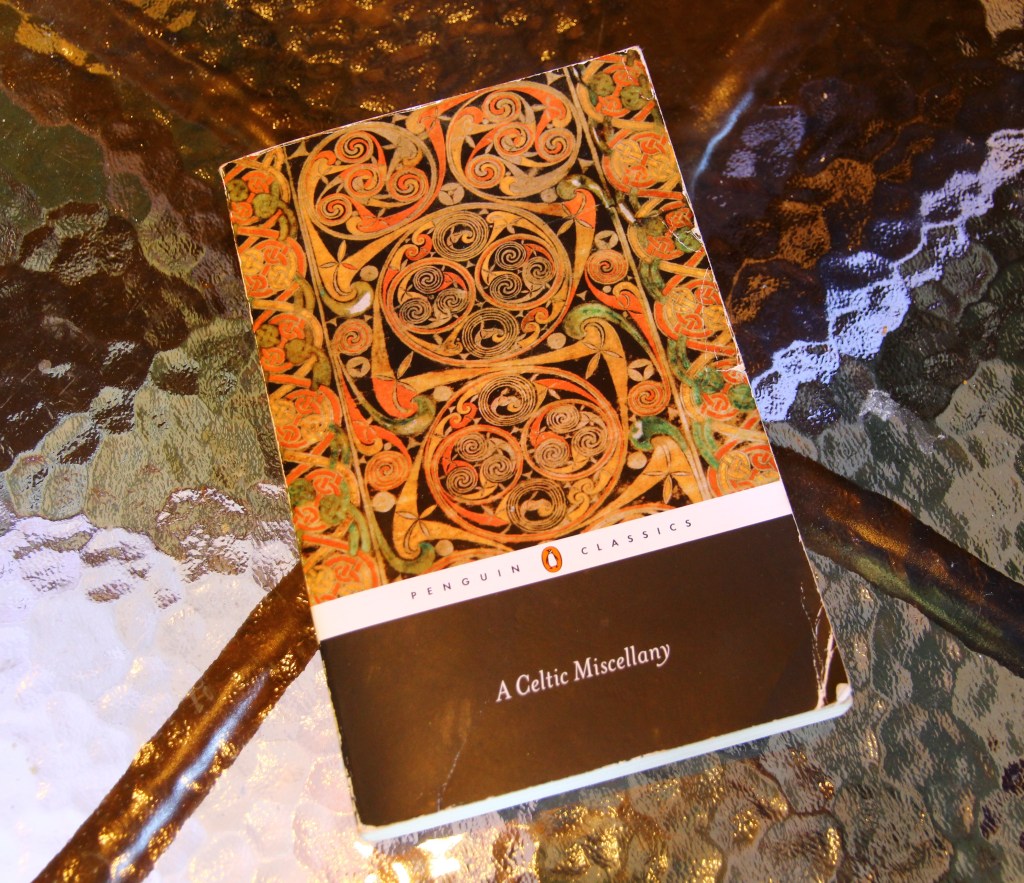
My lovely old book, ‘A Celtic Miscellany’.
The poem features in old but excellent book called A Celtic Miscellany, selected and translated by Kenneth Hurlstone Jackson. There are a couple of alternative translations available online but for me, this printed version has a particular charm and magic. It’s titled The Hermit’s Hut, and it forms the lay or lai (a medieval Celtic or Breton lyrical or narrative poem) of a work called King and Hermit by an anonymous tenth century Irish author. The poem is a dialogue between King Guaire of Connacht and his brother, Prince Marvan, who has chosen a radically different lifestyle to his regal sibling. Guaire begins by asking his brother why he won’t return to live with him in the luxury of his court, and Marvan’s reply makes the lay:
‘…I have a hut in the wood, none knows it but my Lord; an ash tree this side, a hazel on the other, a great tree on a mound encloses it.
Two heathery door posts for support, and a lintel of honeysuckle; around its close the wood sheds its nuts upon fat swine.
The size of my hut, small yet not small, a place of familiar paths; the she-bird in its dress of blackbird colour sings a melodious strain from its gable.
The stags of Druim Rolach leap out of its stream of trim meadows; from them red Roighne can be seen, noble Mucraimhe and Maenmhagh [well known plains in the west of Ireland]
A hidden lowly hut, which owns the path-filled forest; will you go there with me to see it?…
A tree of apples of great bounty, …huge; a seemly crop from small-nutted branching green hazels, in clusters like a fist.
Excellent fresh springs – a cup of water, splendid to drink – they gush forth abundantly; yew berries, bird cherries…
Tame swine lie down around it – goats, young pigs, wild swine, tall deer, does, a badger’s brood.
Peaceful, in crowds, a grave host of the countryside, an assembly at my house; foxes come to the wood before it – it is delightful…
Fruits of rowan, black sloes of the dark blackthorn; foods of whorts, spare berries…
A clutch of eggs, honey, produce of heath-peas, God has sent it; sweet apples, red bog-berries, whortleberries.
Beer with herbs, a patch of strawberries, delicious abundance; haws, yew berries, kernels of nuts.
A cup of mead from the goodly hazel-bush, quickly served; brown acorns, manes of briar, with fine blackberries.
In summer with its pleasant, abundant mantle, with good-tasting savour, there are pignuts, wild marjoram, the cresses of the stream – green purity!
The songs of the bright-breasted ring-doves, a beloved movement, the carol of the thrush, pleasant and familiar above my house.
Swarms of bees, beetles, soft music of the world, a gentle humming; wild geese, barnacle geese, shortly before All Hallows, music of the dark torrent.
A nimble singer, the combative brown wren from the hazel bough, woodpeckers with their pied hoods in a vast host.
Fair white birds come, cranes, seagulls, the sea sings to them, no mournful music; brown fowl out of the red heather.
The heifer is noisy in summer, brightest of weather; not bitter or toilsome over the mellow plain, delightful, smooth.
The voice of the wind against the branchy wood, grey with cloud; cascades of the river, the swan’s song, lovely music.
A beautiful pine makes music to me, it is not hired; through Christ, I fare no worse at any time than you do.
Though you delight in your own enjoyments, greater than all wealth, for my part I am grateful for what is given me from my dear Christ.
Without an hour of quarrel, without the noise of strife which disturbs you, grateful to the Prince who gives every good to me in my hut…
The poem ends with King Guaire, having learned all about his brother’s quiet life in the woods, declaring that, actually, he’d happily give up his crown and his opulent palace to go and live with Marvan in his hut. This is the final verse, from an earlier translation by Kuno Meyer:
I would give my glorious kingship
With the share of my father’s heritage—
To the hour of my death I would forfeit it
To be in thy company, my Marvan.
Wise words, Guaire…
For when all is said and done, of the two brothers in this beautiful medieval poem, it’s Marvan that truly lives in the real world. A stress-free, peaceful life surrounded by nature’s abundance and the song of the wild. What more do we really need?
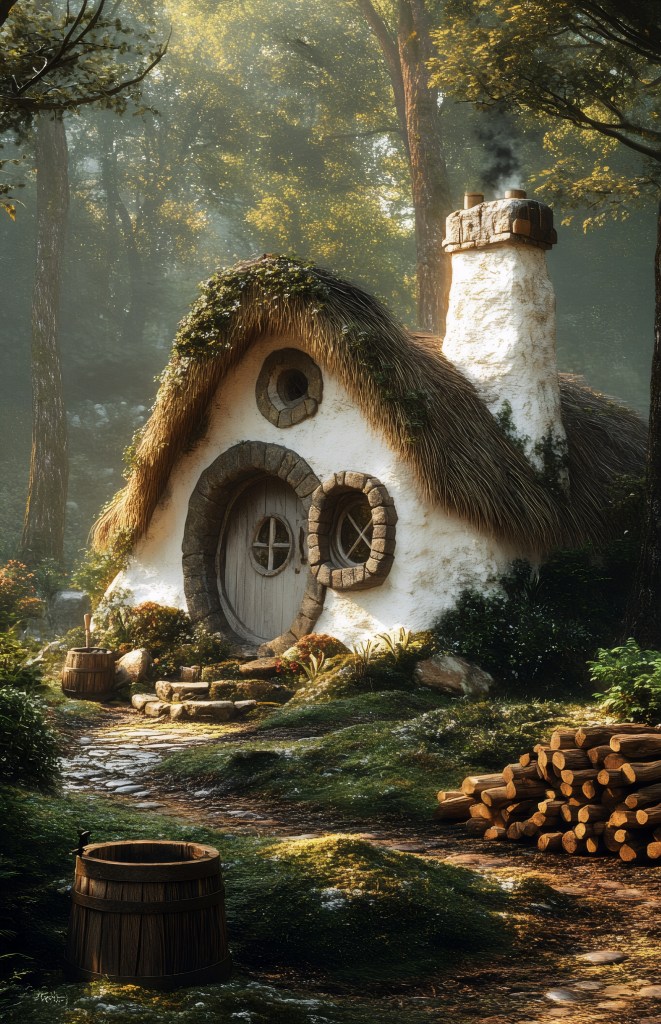
Room for one more, Marvan…?


Oh, I know these feelings so well…
LikeLiked by 3 people
I thought you might, John. I was saying just the other day that sometimes, when I’m out and about in the world of today, I feel as though I want to walk backwards, away from it all with my hands held out in front of me. Nevermind all this insane AI stuff, I wish they’d hurry up and invent a time machine!
LikeLiked by 2 people
I understand how you feel, and I occasionally feel as though I was born in the wrong century.
LikeLiked by 3 people
Me too, John, absolutely me too. I think a lot more people are feeling the same these days.
LikeLiked by 3 people
This stems from sadness with how our world is slowly crumbling in my view.
LikeLiked by 2 people
So true, John, that’s exactly what it is.
LikeLiked by 2 people
I’m with you and Marvan my love, that sounds idilyic!
I’d be more than happy with a few round-houses in a wood, open fires and peace, Badgers and Deer as neighbours, mead in the still. What a wonderful way to live!
LikeLiked by 1 person
It’s a way of life that’s becoming more and more appealing. It’d be wonderful to be able to throw off the trappings of this mad modern world. If only…!
At least we have the mead… 😀
LikeLiked by 1 person
I do know what you mean. Somewhere with space to breath around you, where you can look at the world rather than through the front windows of other houses. Somewhere were all you can hear is the Bees, and not Action-Man and his leaf blower…. We’ll get there.
We’ll ALWAYS have the mead 😀
LikeLiked by 1 person
Oh God, spare us the power tools! I hope we do get there…
…in the meantime, how about ‘a cup of mead from the goodly hazel-bush, quickly served’? 😉
LikeLike
wonderful picture at the end! My Mum and me used to dig pignuts out of bankings – they’re very like peanuts (which are a ground nut anyway) – don’t know of you’ve tried them. What do you think ‘heath-peas’ are? I have in mind gorse flowers or pods…
LikeLiked by 2 people
It is a great picture, isn’t it? It’s my dream home now! I haven’t tried pig nuts before, but it was lovely reading your memories of foraging for them with your mum. I’ll have to have a go myself. As for heath-peas, I believe they’re a type of pea (perhaps they’re related to sweet peas), also known as bitter vetch, or the latin name of ‘Lathyrus linifolius’, and it’s found in woodlands, forest edges, hedgerows, heaths and rough grassland. They’re pretty little things – and purple! Apparently the tubers can be cooked and eaten like chestnuts. Maybe I’ll have to look out for those too! 🙂
LikeLiked by 1 person
I’ve been looking for hazelnuts – I didn’t know until recently that, apparently, you can eat them green and they’re quite nice that way. Do you know how to recognise pignuts and where to find them? They’re usually in bankings and the tops look a bit like hedge parsley but not as profuse in their flowering
LikeLiked by 1 person
I didn’t know you could eat hazelnuts green, another one to try out then! I admit I don’t know how to recognise pignuts, but from your description I’ll have a good base to build on. Looking forward to that. 🙂
LikeLiked by 1 person
For the pignuts, you sort of dig into the bank below the plant about 3 or 4 inches below the above ground bit and find little white ‘nuts’ a bit smaller than peanuts. They’re very nice. We used to just use our fingers as I think they were always on fairly sandy types of banks.
By the way, they recommend you don’t eat lots of green unripe hazelnuts at once – just a few
LikeLiked by 1 person
Foraging for pignuts sounds fun, that’s definitely something I’d like to try, as well as eating them! Being near the sea we have a lot of sandy soil over here. Do you roas them too, or can you eat them raw?
Green hazelnut caution noted. 🙂
LikeLiked by 1 person
we used to just dig them out of the bank, clean them off a bit with our fingers and then eat them raw.
LikeLike
Thank you for sharing this, it’s so beautifully written!
LikeLiked by 1 person
It’s a wonderful poem, isn’t it? And so evocative. Hard to believe it’s more than a thousand years old.
LikeLiked by 1 person
Wonderful post and wonderful poem. Marvan’s world does sound like a paradise doesn’t it? Do you think he has room for two more? 🙂
LikeLiked by 1 person
I’m sure he’d have room for all of us!
Thank you, glad you like it. 🙂
LikeLiked by 1 person
Thank you Alli for your very interesting blog. Your historical knowledge is amazing. I went to the Celtic Rainforest you have written about so eloquently on Tuesday this week and found it absolutely fascinating. I am a writer too, more a nature writer really and folklore, and have recently started a blog about: should I/shouldn’t I move to Criccieth? I am currently writing a book about the ancient stories in the land and sea around Gwynedd. I identify with your needing to escape this consumer culture world we live in. I spent part of 22 years living in rural France without mod cons and hanker after this way of life again. Anyway, thank you SO much for all you write it is inspiring. If you wish to connect on FB I am at:
m.facebook.com/julie.armstrong.3323
And my blog: walkswordsandancienttales.blogspot.com
All very best wishes to you Julie
LikeLiked by 1 person
Thank you so much for the kind comments, Julie, they’ve really made my day. 🙂 I’m looking forward to reading your blog about Criccieth. We go to the castle there (I did a post about it back in 2019 when I did my Welsh ‘castle quest’), and it’s a beautiful part of the world. And of course, the stunning Celtic Rainforest isn’t far away!
Your time in France sounds idyllic, and in truth, the more crazy and technologically-obsessed this world gets, the more I want to back away from it.
Thanks again for reaching out, it’s lovely to ‘meet’ you.
LikeLike
I love this, Alli!
I guess I live a kind of hermit life here in this little house in this small town. it’s my choice. After so many years filled with so many people (students, colleagues, friends) change after change after change? Nature has always been my best friend, since I was a little kid. It was the only place that was consistent, that made sense, that didn’t go off in one direction after promising something else. From the time I was 8 or 9 years old… It’s still the most real (only real?) thing I know. I don’t just love it — I believe it loves me because, after all, I AM it. So…everything you write here makes sense. I’d also go back in time but I’d like to be vaccinated first and have my eyeglasses 😆
Maybe this will speak to you? https://martha-kennedy.blog/2026/10/03/brains/
LikeLiked by 1 person
I would love to live your kind of life, Martha, and it’s our goal as a family now to live somewhere more remote with some land around us where nature can be itself and we can tend it and live simply among it all. I can see exactly why you’d have chosen to put down roots where you have, and we feel the same having had our fill of humans.
You’re a kindred spirit, my friend, and it’s good to know I’m not completely mad in wanting to back away from the chaos and stress of today’s human world. 🙂
LikeLiked by 1 person
Yep. Humans are OK but… 😆
LikeLiked by 1 person
…indeed, BUT only in small doses! 😀
LikeLike