We’ve done a lot of walking since we moved to North Wales some seven months ago, although in terms of discovering all this wonderful wilderness has to offer, we haven’t even scratched the surface. Nevertheless, so far we’ve collected several favourite walking routes, and last week we headed out into the foothills of Snowdon to revisit one of the very best. The idyllic trail winds through beautiful oak woodland, past waterfalls and over rock-strewn streams, climbing steadily to the summit of a ragged hilltop crowned with the remains of a castle tower and with views to take your breath away. And as if that isn’t enough, there’s medieval myth and magic afoot, for when you wander through this enchanting place you’re following in the footsteps of the young Merlin to the place where the legend of the Welsh red dragon was born.
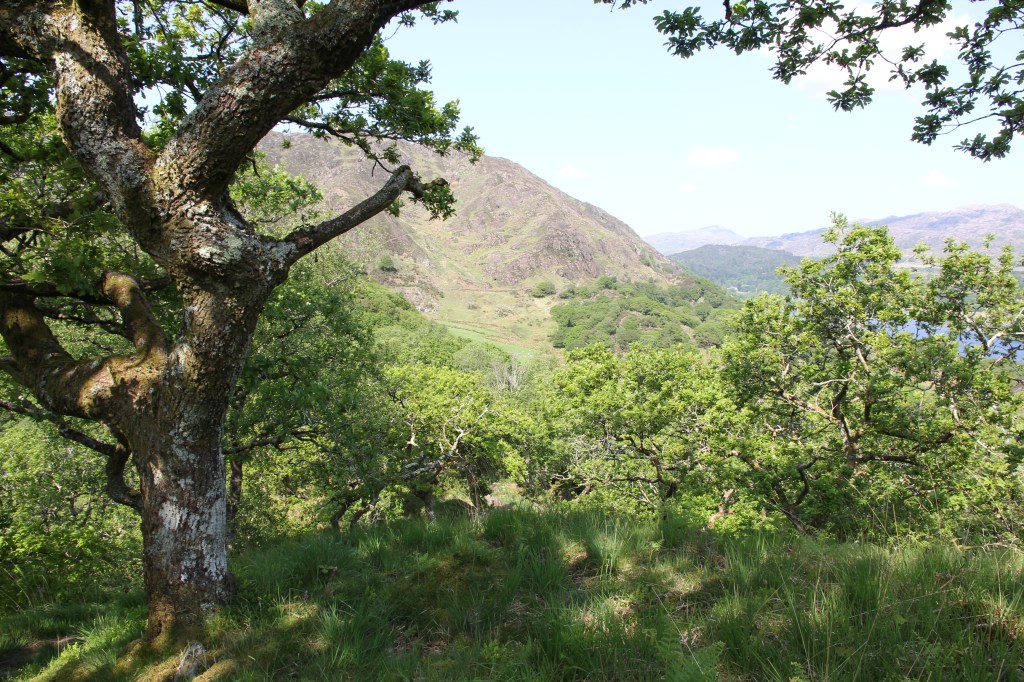
A land of myth and magic awaits…
The walk up to Dinas Emrys, as it’s known, starts from the Craflwyn National Trust car park just outside the stunning village of Beddgelert. It’s not an especially long trail, being little more than a couple of miles there and back, but what it lacks in length it makes up for in height, and almost over-compensates for in views and history.
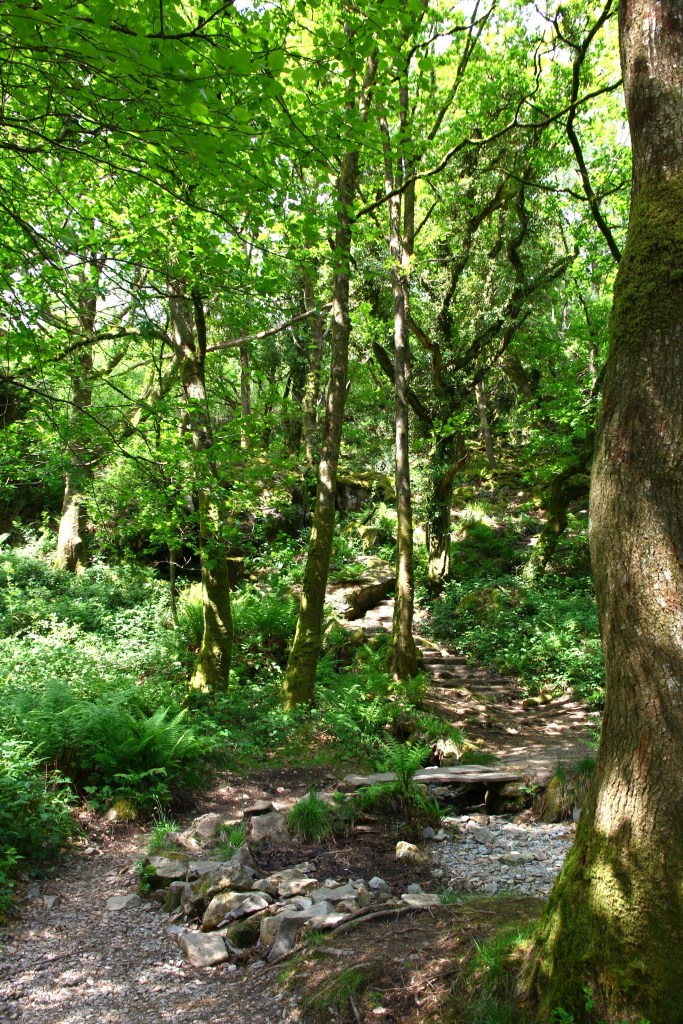
The trail leads up through enchanting woodland…
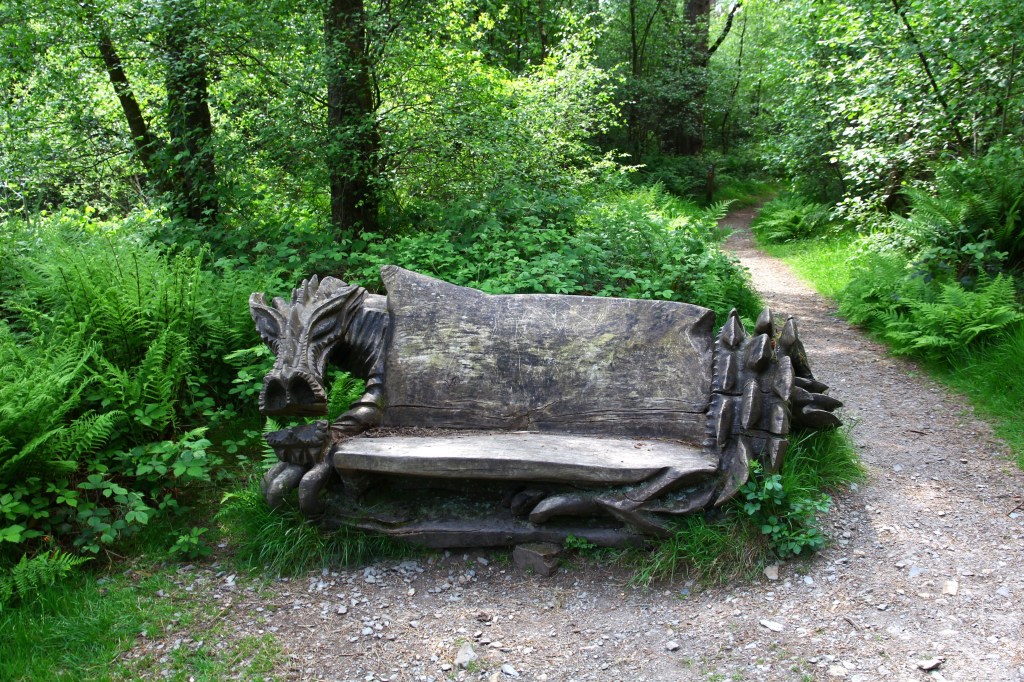
A welcome dragon seat shows us we’re on the right path
The first signs of occupation on the hilltop date from the late Roman period from 3rd – 4th centuries AD, and on the highest point of the rocky outcrop sits the stone base of a castle tower, dated to the 12th century and thought to have been in the hands of Llywelyn the Great (d.1240) after he reached the pinnacle of his power in 1201. But what most people come here for is rooted in a time long before Llewelyn or any of the Welsh princes roamed the land. Rewind to the sixth century, when the Celtic Britons were standing their ground against the advancing Saxons.
Our earliest medieval historians could be gifted, you might say, with somewhat creative minds. It wasn’t unusual for some to blur the boundaries between history and fantasy, and from this melting pot of fact and fiction legends could be born. A good story could take hold of the popular imagination and embed itself in the culture, beliefs and sometimes the very identity of a nation. The earliest source for Dinas Emrys is found in a chronicle penned by a ninth-century monk from Bangor named Nennius, who regales us with the tale in his Historia Brittonum, or History of the Britons.
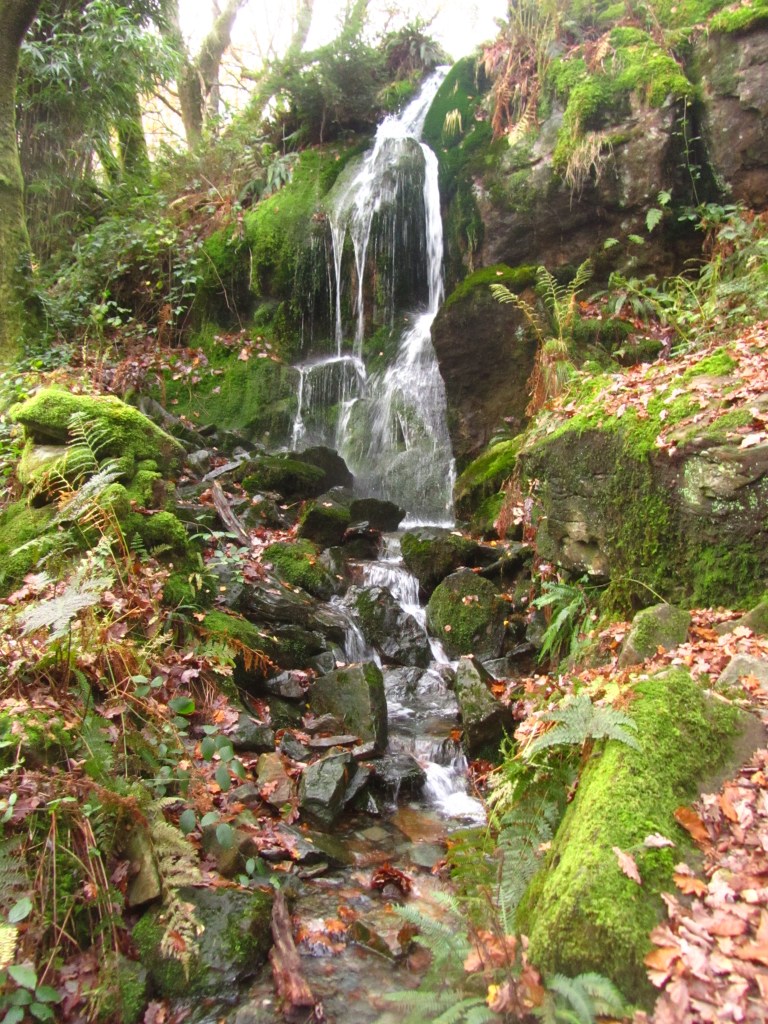
Waterfalls and rock-strewn rivers and streams add to the magic…
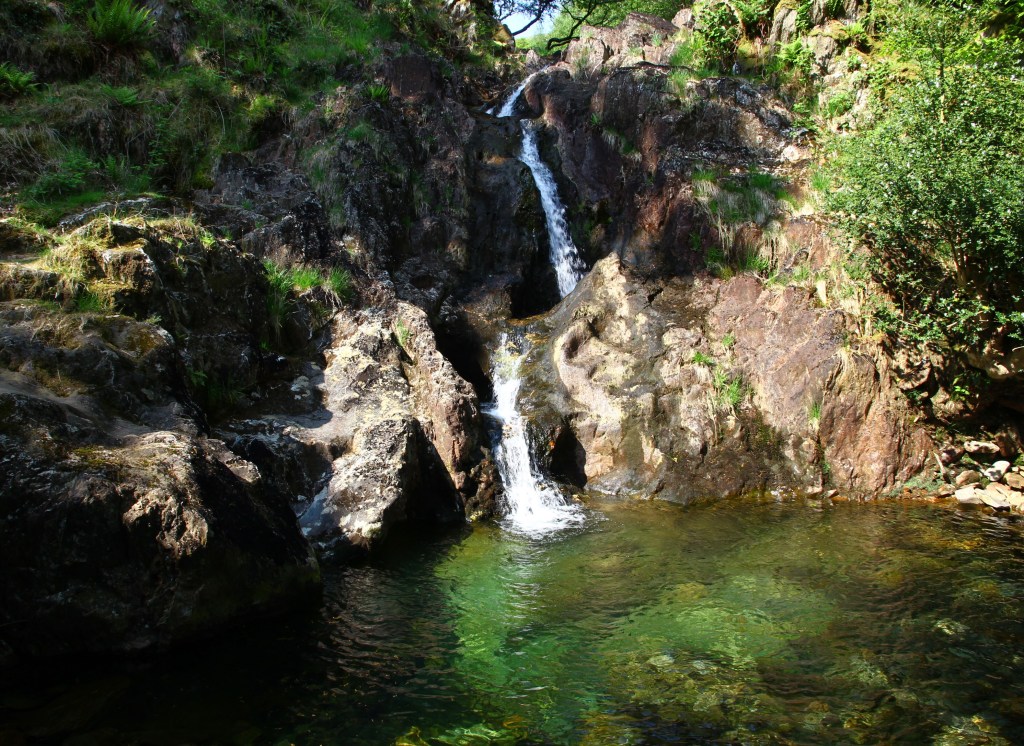
This one tumbles into the enticing Merlin’s pool, the perfect place to stand and stare, and to cool off hot feet…
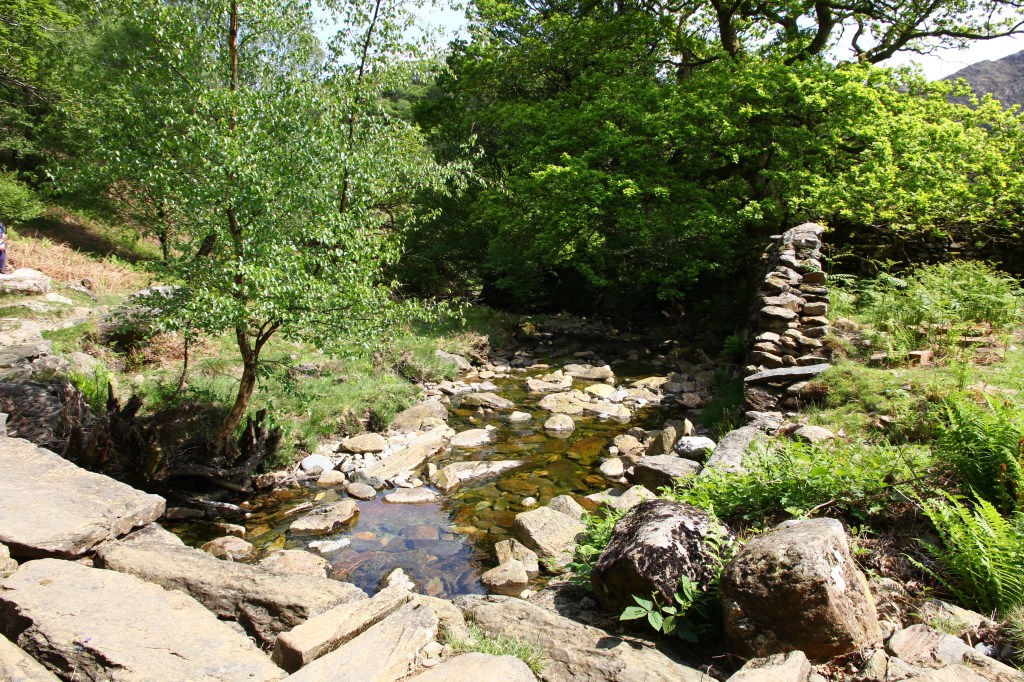
…and the water runs from Merlin’s pool down across the hillside under a stone bridge, a picturesque crossing on the trail
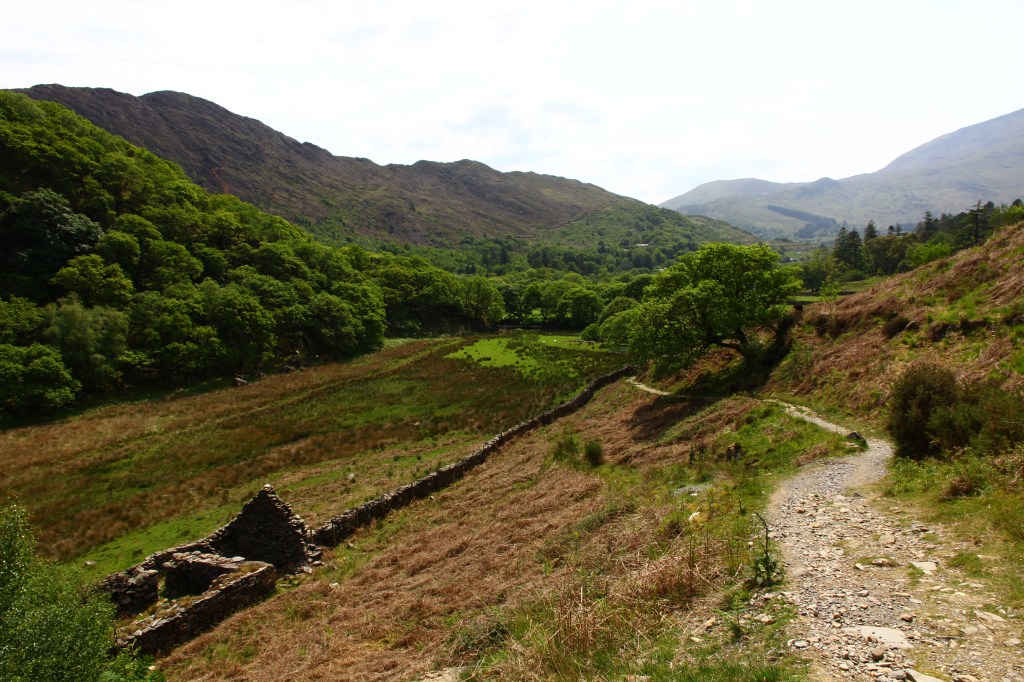
As the path wends its way up, the views just get better and better
The story goes that, in the fifth century, the Celtic King Vortigern chose this lofty location, guarded by mountains and overlooking the Gwynant valley, on which to build a citadel to defend himself from the Saxons. He set about recruiting all the necessary craftsmen, stonemasons and materials and the work began on his new fortress. However, things didn’t go to plan. Every morning when the workforce turned up, they found the walls they’d toiled so hard to build had completely collapsed, and their tools had gone missing. After a while Vortigern, frustrated and bewildered with the lack of progress, summoned his ‘wise men’ for some urgent advice. Accordingly, the king was told that he must:
‘find a child born without a father, put him to death, and sprinkle with his blood the ground on which the citadel is to be built, or you will never accomplish your purpose’.
An obvious solution, really…
Messengers were duly sent out across the country, and eventually a lad from Carmarthenshire was brought to Vortigern upon his hilltop. But this was no ordinary boy: his name was Myrddin Emrys, but we know him today as Merlin.
The preparations were being made for the sacrifice, so young Merlin had to think fast to come up with a way out. Drawing on his supernatural powers, he announced to the king that the reason for the failing building project lay beneath the site. Under the ground, he told Vortigern, was a pool containing two dragons, and it was they who kept destroying the foundations of the new fortress. Vortigern ordered his men to dig down into the mountain, and sure enough, there it was: a pool containing two sleeping dragons – one white and one red. Once disturbed, the winged beasts began to fight, and:
‘the red one, apparently the weaker of the two, recovering his strength, expelled the white one … and the latter being pursued through the pool by the red one, disappeared.’
The king was impressed, but Merlin then made himself look even better by interpreting the brawl as a prophecy, that:
‘at length … our people shall rise and drive away the Saxon race from beyond the sea, whence they originally came’.
Thus, the boy foretold that Vortigern’s red dragon would ultimately triumph over its white rival, which represented the intruding Saxons. With his ingenuity and magical powers Merlin had saved the day, and his neck. The king went on to build his fortress successfully, naming it Dinas Emrys in honour of Myrddin Emrys, the boy Merlin, and his great prophecy.
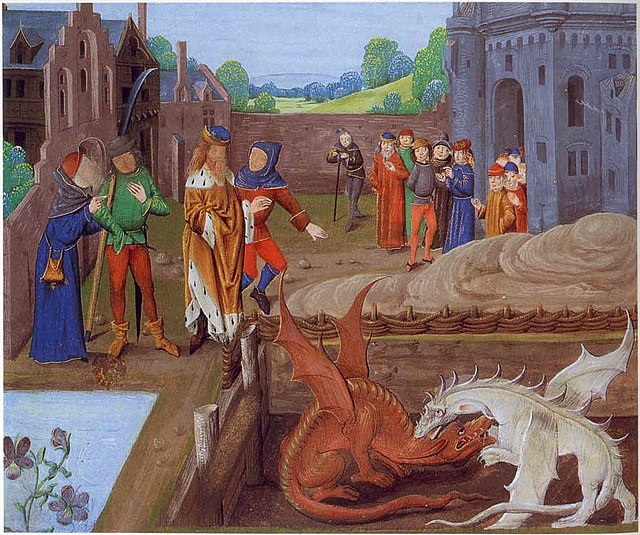
Merlin explains to Vortigern the reason for his failing castle walls as the two dragons fight it out for supremacy
The mystical story featured in other works of history and literature during the Middle Ages. In the twelfth century it was immortalised in Geoffrey of Monmouth’s magnum opus, History of the Kings of Britain, most likely drawing on earlier accounts including that of Nennius. Geoffrey, an Anglo-Norman cleric, historian and bishop of St Asaph in North Wales, also had a fertile imagination. As well as breathing new life into the tale of Dinas Emrys, he deftly wove into his historical text the exploits of a certain heroic king called Arthur, thus paving the way for the creation of another enduring legend…
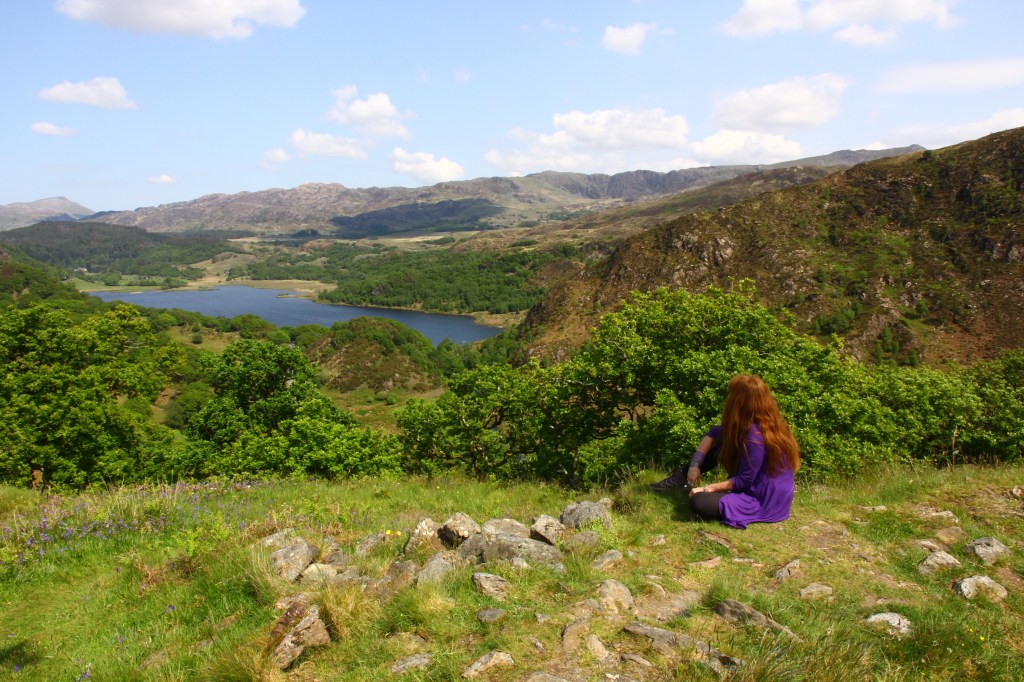
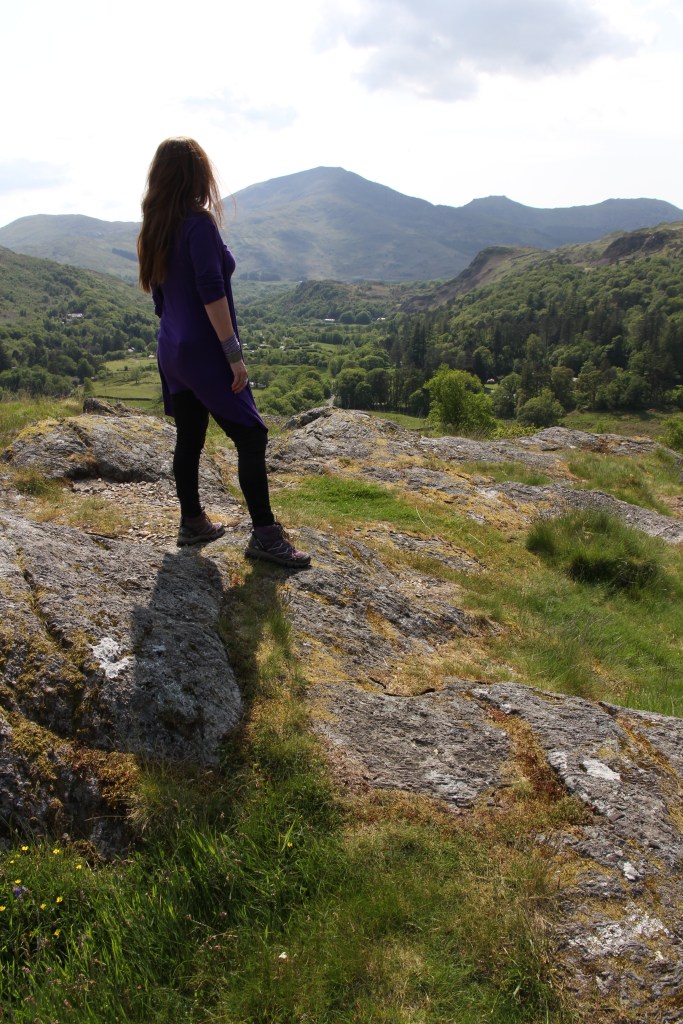
Taking in the awe-inspiring views from the summit of Dinas Emrys…

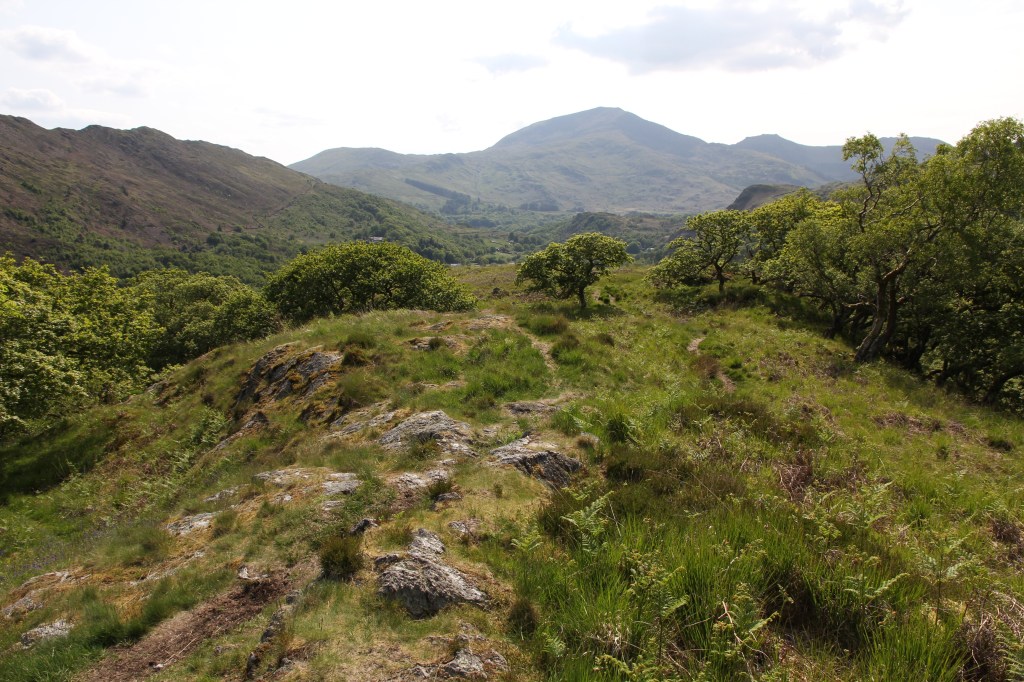
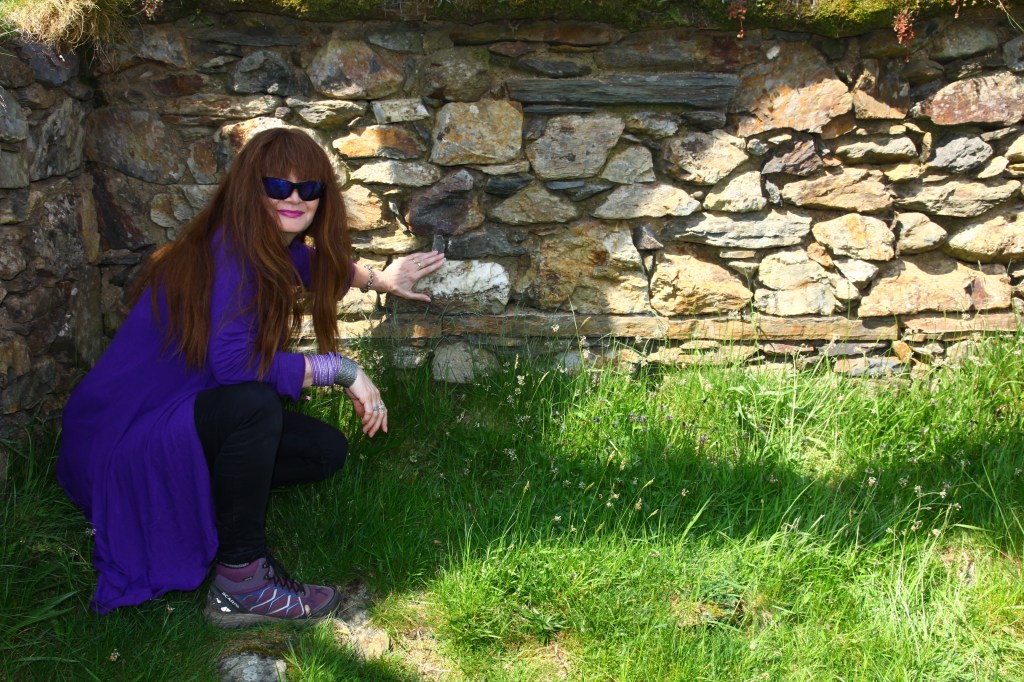
Exploring the stone base of the later, twelfth century tower on the summit
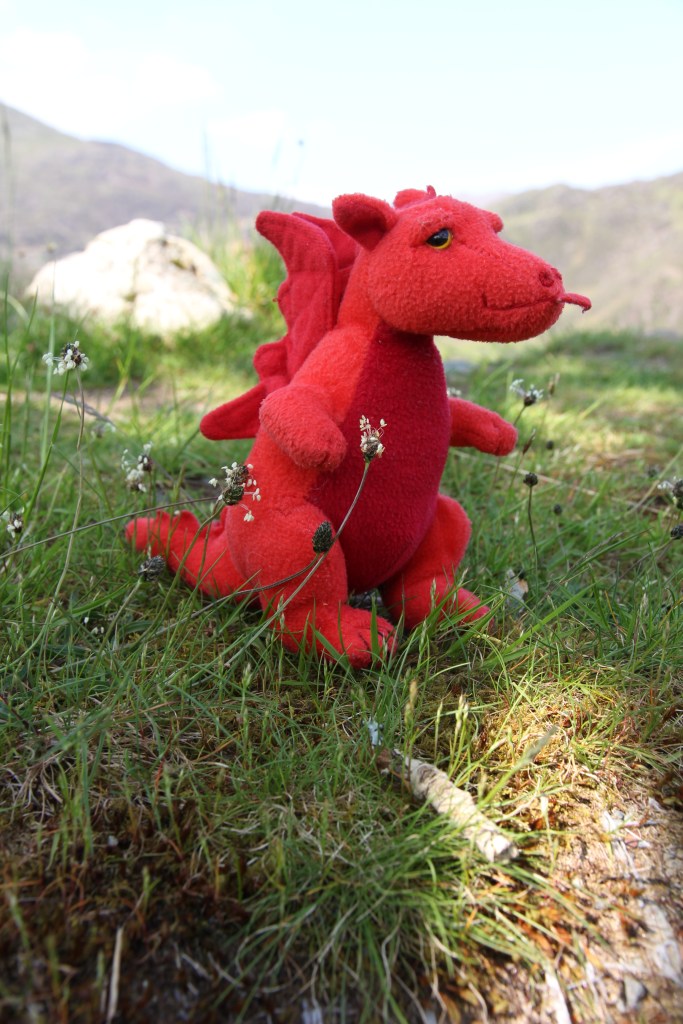
Geoffrey’s book became hugely popular and influential throughout Europe, and soon dragons took up their place in poetry and heraldry as symbols of Welsh royalty and heroism. In legend, Uther Pendragon, whose name means ‘cruel dragon chief’, is said to have sported a dragon as his crest, and over time the mythical creature persisted and established itself as a Welsh emblem. The banner of the Welsh leader and rebel, Owain Glyndŵr (c.1356 – 1416) was emblazoned with a golden dragon, and in 1485, in what may have been a conscious reference to the legend of Dinas Emrys, Henry Tudor marched to Bosworth flying the red dragon. It’s likely that the design of Henry’s triumphant banner contributed to the red winged beast being adopted as the badge of Wales in 1807.
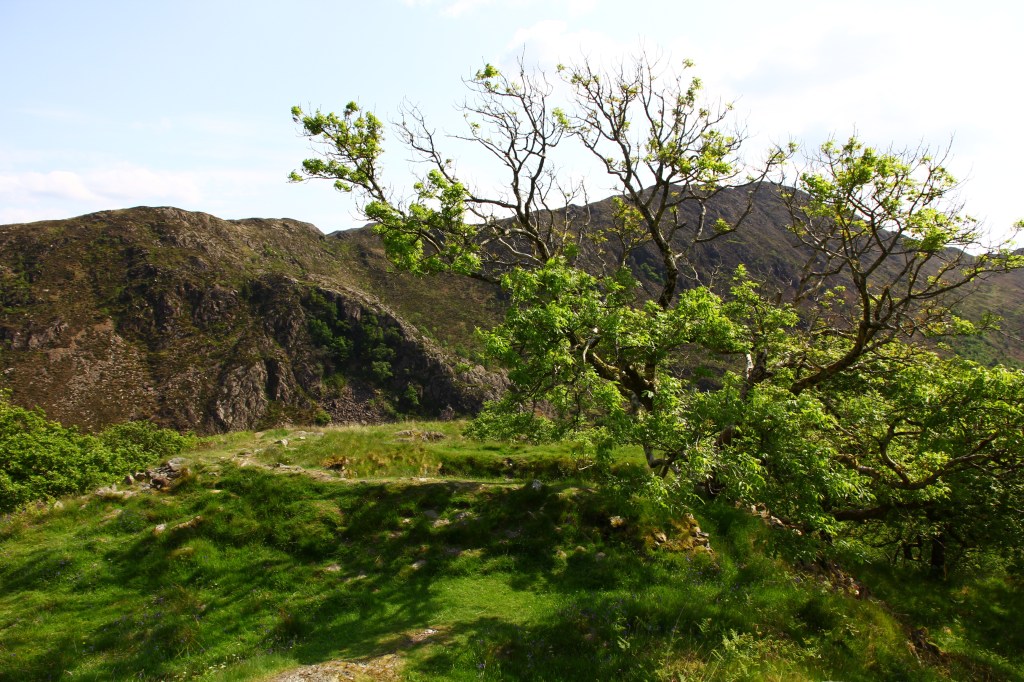
View across the twelfth century tower site
For centuries the ancient hillfort of Dinas Emrys stood quietly watching rulers come and go, keeping its secrets buried until the twentieth century, when excavations were carried out on the site in 1910 and the mid-1950s. Aside from evidence of late Roman occupation, the team found charcoal deposits in the base of the twelfth century tower on the summit that suggest it may have been burned down on purpose. But the most intriguing discoveries were a pool and the remains of rough stone ramparts on the Western edge that had been rebuilt several times over. These fragmented defences, together with pottery and amphorae sherds from the eastern Mediterranean and southern France, were dated to the 5th and 6th centuries AD, to the time of Vortigern. The evidence gathered indicates that this was, in fact, the residence of a Dark Age chieftain who was wealthy enough to import expensive goods and wine from distant lands. So maybe Nennius and his fellow medieval writers were onto something after all…
Gazing west across the top of the hillfort towards the outer ramparts that date to the time of Vortigern…
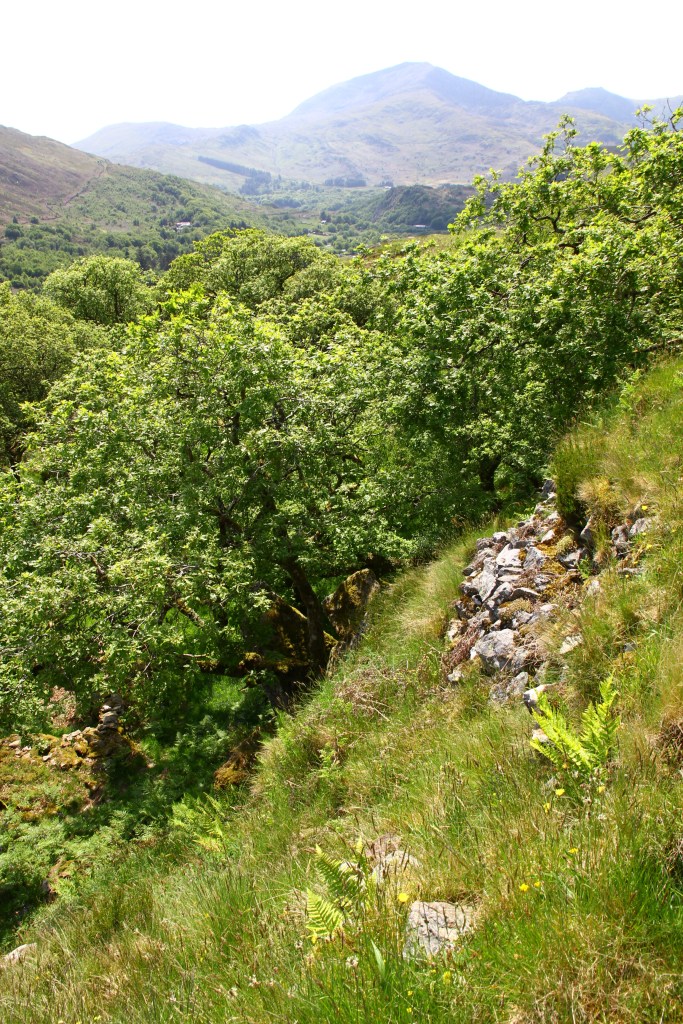
…and a glimpse at some further fragmented remains on the south side
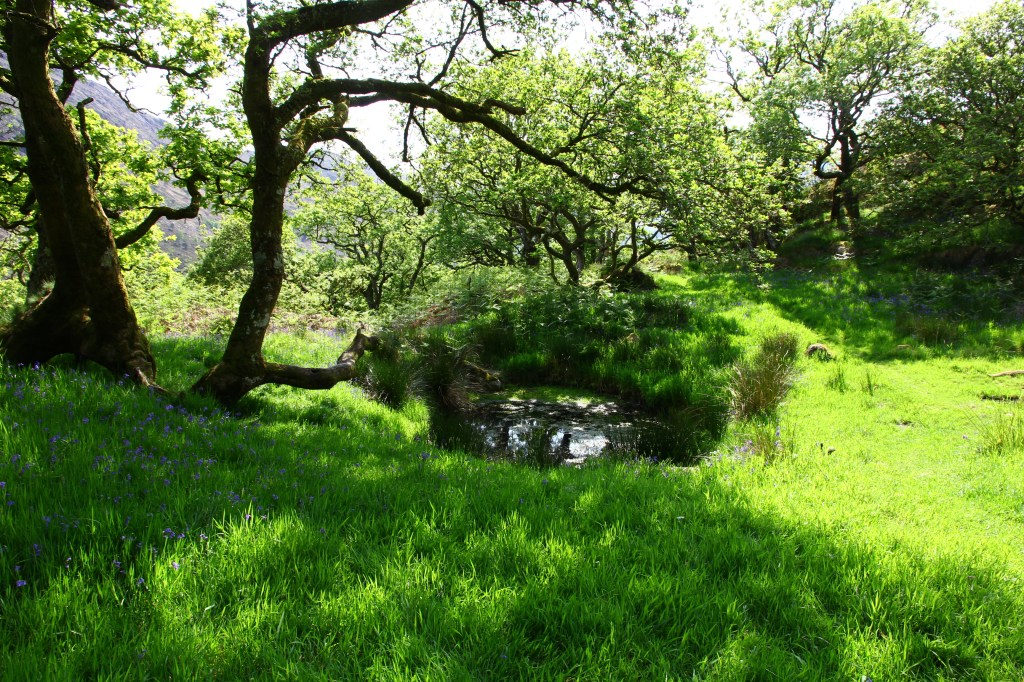
The pool, or medieval cistern, that was unearthed during the archaeological investigation in the mid 1950s
Today, the legendary wooded trail that leads up to Dinas Emrys is truly a haven of peace and tranquility, and when you arrive back down to Earth you really do feel as though you’ve been on a unique journey. Whether or not Vortigern and Merlin really did meet by the crumbling walls of the citadel all that time ago, it’s impossible to ignore the legacy of the story. For there’s an undeniable, even palpable sense of magic that seeps from every rock, stream and tree in this beguiling place. And as for the dragons who dwelt in the pool atop this craggy hill in the heart of Snowdonia, well they’re real too. Of course they are…
 medievalwanderings.com